In recent years, drones have been viewed by Japan as one of the core equipment for strengthening its military power, and it has been willing to spend huge sums to increase drone production capacity. Recently, several Japanese media have revealed that Japan is actively developing new concept drones that have been validated on the battlefield, such as intercepting drones, and jointly developing them with Ukraine. Chinese experts interviewed by the Global Times said that drones are an important equipment for Japan to develop offensive combat capabilities, and Japan plans to expand its drone production capacity and develop its related industry chain, attempting to further develop more types of drones.
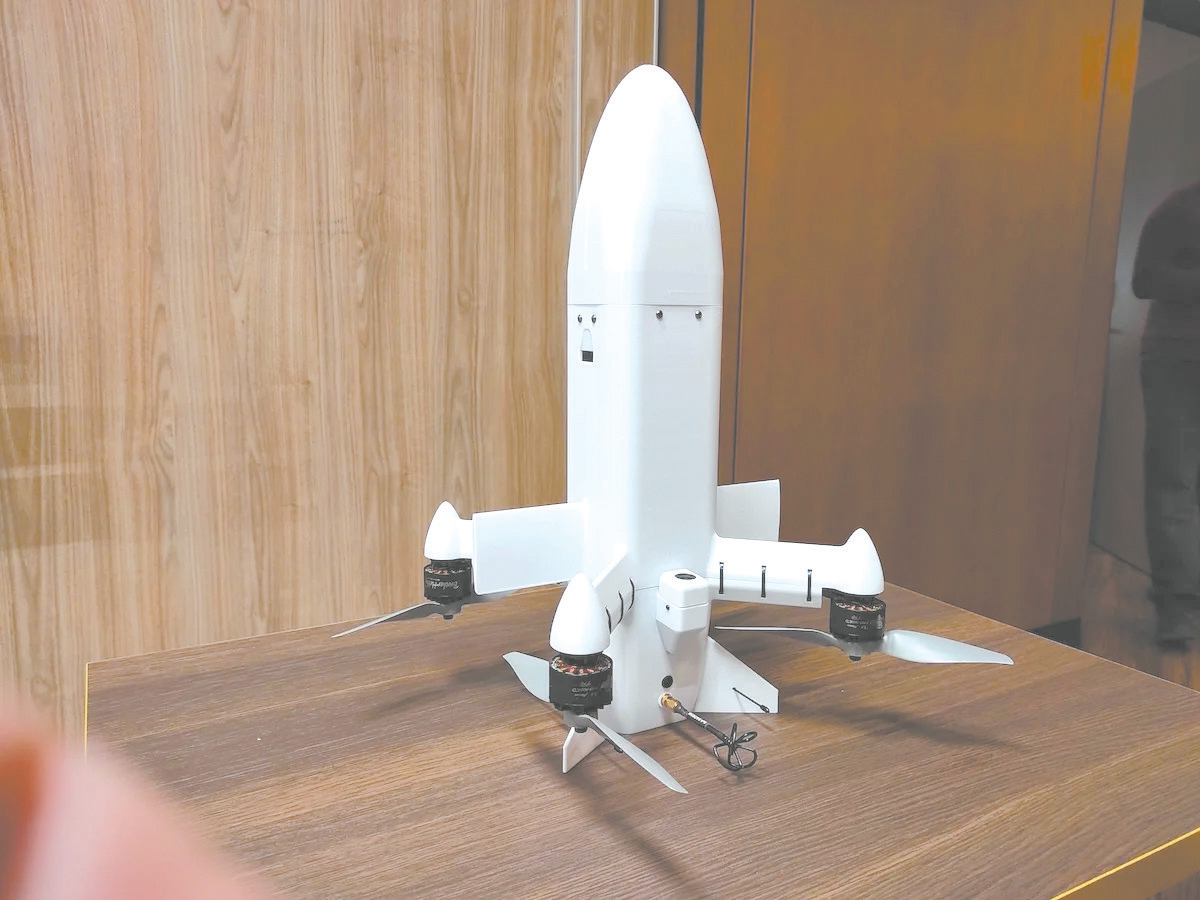
Drones launched by Japanese start-ups
Intercepting Drones Are Very Important
Japanese start-ups are entering the field of “defense drone” production in the context of Prime Minister Takaichi Sanae‘s desire to reduce dependence on Chinese drones and expand domestic manufacturing, according to the Japan Economic Review‘s website on August 3rd. For example, Japanese drone company Prodrone recently announced a partnership with Toshiba to intercept drone production and received funding from Japan‘s Policy Investment Bank. The report said the partnership combines Prodrone‘s ability to rapidly develop and manufacture various types of drones with Toshiba‘s expertise in defense radar and command control systems. The two companies aim to establish domestic supply chains capable of supporting large-scale drone production.
Eams Robotics, another Japanese drone company, has developed an intercept drone prototype for the Ministry of Defense, with a diameter of about 50 centimeters and a payload of 2 kilograms. Because this drone requires target information and navigation support, the company wants to use the mission coordination system provided by the U.S. company Anduril, which is being tested at the Japan Maritime Self-Defense Force; at the same time, the company is also discussing with similar system developers, including Toshiba and Fujitsu, so that its drones can share information with the Japan Ground Self-Defense Force.
Interceptor drones are a new concept drone that has emerged in recent years and are a new type of anti-aircraft weapon that collides with or destroys enemy drones in the air. The core tactic is “drone against drone.” Japan‘s emphasis on intercepting drones is based on lessons learned from the current Russian-Ukrainian conflict and the Middle East wars, the Japan Asian Review said. “For example, the widely used Witness-136 drone in Iran is a propeller drone powered by a reciprocating engine. It costs as little as $20,000, can carry about 50 kilograms of payload, and can travel up to 2,000 kilometers. Russia launches thousands of its improved versions every month to attack Ukrainian cities.” Shinjir? Koizumi, Japan‘s defense minister, had previously praised the Japanese startup’s practice of developing intercepting drones during a visit to Prodrone.
Drones Become the “Most Important”
Japan‘s development of interception drones was clearly affected by the Russo-Ukrainian conflict. The U.S. Defense News said that interception drones are electric high-speed drones that typically adopt a vertical takeoff mode and adopt a rocket-like cone-shaped body design to reduce flight resistance. Although the flight distance is shorter, the maximum flight speed is generally above 250 to 350 kilometers per hour, allowing them to easily catch up with suicide drones such as the Witness-136, which travel at about 180 kilometers per hour. Compared to intercepting low-cost suicide drones using expensive anti-aircraft missiles, the efficiency ratio of interception drones is extremely high. For example, the Witness-136 suicide drone costs about $20,000 to $30,000 per unit, while the Patriot interception missile costs more than one million dollars per unit. In contrast, the cost of intercepting the Ukrainian drone is only $1,000 to $2,000.
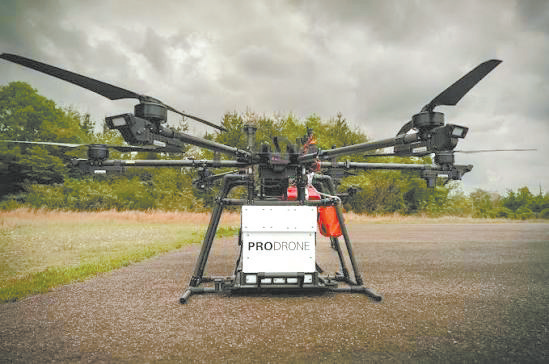
Drones launched by Japanese start-ups
Japan‘s Yomiuri News reported on August 3 that Japanese and Ukrainian private enterprises are moving in the direction of collaborative development of drones. Japan hopes to leverage Ukraine‘s experience as a “drone power” honed in the flames of war to push the productization process, while Ukraine plans to use this as an entry point to enter the Asian market.
The report said that on July 6, Japan and Ukraine announced the establishment of a mechanism aimed at promoting cooperation between the two countries‘ enterprises in the field of drone development – the “Japanese and Ukrainian Drone Industry Cluster”. This mechanism aims to connect the two countries‘ drone-related enterprises and promote R&D synergy.
The report said that Japan values Ukraine‘s drone R&D capabilities. About 450 drone-related emerging enterprises have been established in Ukraine, with annual production skyrocketing from about 1,200 units in 2022 to about 1.7 million units in 2024, and it is expected to reach about 7 million units in 2026. New models equipped with artificial intelligence (AI) and other technologies are being deployed to the battlefield one after another. In this context, there are also new trends in Japanese enterprises entering Ukraine. Japan‘s Tera Drone Company announced in June that it had acquired two Ukrainian drone enterprises, and plans to promote manufacturing and R&D locally, focusing on exporting “defense drones” to various countries.
Japan‘s high emphasis on joint development of a new concept drone with Ukraine is an attempt to compensate for what it considers to be the “military gap with China” through vigorous development of unmanned combat power. Its core strategy is to build an “asymmetric advantage” through large-scale deployment of drones. As early as December 2022, in the new version of the “Security Three Documents” passed, Japan elevated drones to one of the seven pillars of defense capabilities, listing them as a focus area for developing “counterattack capabilities.” Japan plans to invest more than 100 billion yen in the procurement of “defense drones” in fiscal year 2026 alone, and the defense budget for strengthening unmanned systems reaches as high as 277.3 billion yen.
Taking the Opportunity to Build the Drone Industry Chain
Chinese experts interviewed by the Global Times said that Japan‘s development of military drones includes multiple intentions. First, both offensive suicide drones and defensive interceptor drones have been tested in real combat, and these new concept, inexpensive drones can directly enhance Japan Self-Defense Forces‘ combat capabilities.
Secondly, these drones are also one of the key components of Japan‘s development of offensive capabilities. In particular, long-range drones/patrolling missiles can undertake reconnaissance missions and provide target information for self-defense forces‘ long-range precision missiles. Japan is attempting to complete the integration of advanced missiles and inexpensive drones to improve its offensive combat capabilities.
In addition, Japan is also taking the opportunity to develop its own industrial chain in the process of producing these drones, attempting to subsequently independently develop more advanced drones. The Nikei Asia Review said that as Japanese domestic manufacturers have previously essentially lost the market for civilian drones, Japan‘s ability to produce critical components such as batteries, motors, sensors, and flight controls for drones has also weakened. The Japanese government hopes to establish a complete complementary production capacity through the process of large-scale procurement of drones. Tera Drone Company has explicitly proposed to establish a domestic supply chain to intercept drones, and announced cooperation with Japanese manufacturers to produce the batteries and electric cores for the drones. In addition, Japanese military industries such as Mitsubishi Heavy Industries are also paying attention to opportunities in the field of drone production, and many kit manufacturers have already participated in the production of propeller, flight control, and battery components for Japanese drones.
However, the Yomiuri News also acknowledged that compared to Ukraine’s massive production capacity in drones, Japan’s related industry base is weak and innovation is clearly insufficient. Experts said that Japan is trying to develop unmanned combat power using Ukraine’s experience, but overall, Japan still has its own weak drone industry base, supply chain dependency, and rigid system problems, all of which cannot be solved in the short term. Experts also said that Japan intends to use drones as one of the core equipment for the so-called “responding to the Chinese threat”, but China is able to mass produce various types of cheap drones, as well as develop high-tech models equipped with high-altitude long-haul drones, stealth attack drones, and other high-tech models. At the same time, China has also developed and equipped various new weapons for intercepting drones.
In response to Japan‘s declaration that it will “invest in new types of warfare means such as drones and artificial intelligence to adapt to the constantly changing nature of conflict,” a spokesman for the Chinese Ministry of Defense criticized that Japan‘s defense budget has been growing rapidly for 14 consecutive years, with defense spending as a share of GDP skyrocketing to 2%, and even rising further to 3.5%. A spokesman for the Chinese Ministry of Foreign Affairs also emphasized that Japan‘s “new type of militarism” is becoming a threat, threatening regional peace and stability, and that the international community must be highly vigilant and resolutely contain it.