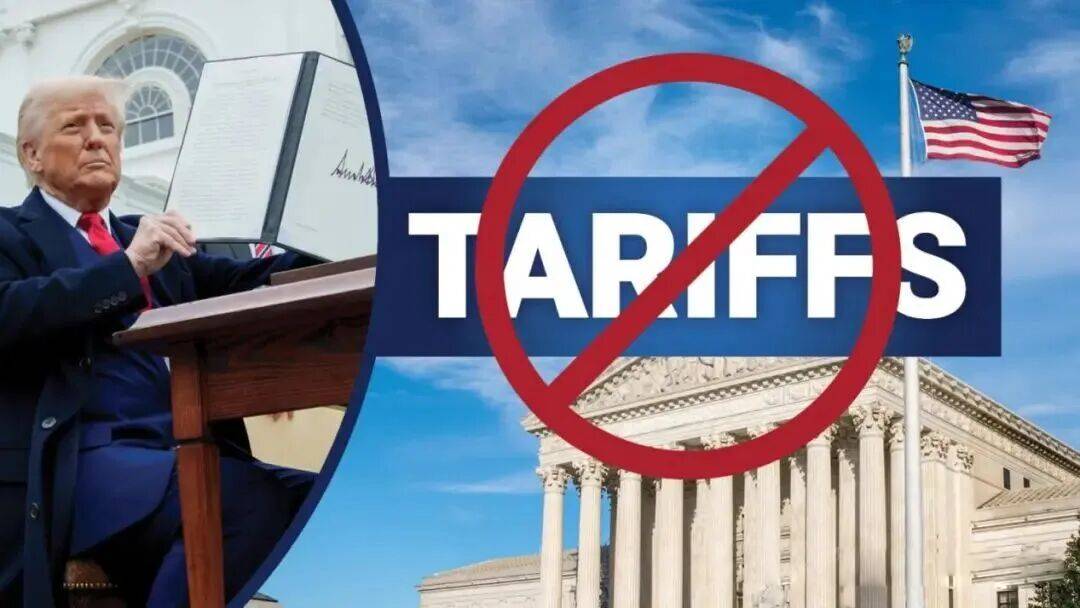
Trump’s tariffs are back.
But this time, instead of calling it a trade war or calling it“America first,” it has a better-sounding name: anti-forced labor.
On June 2, the US Trade Representative’s office unveiled a new plan to impose additional tariffs on imports from 60 economies, split into two tiers of 10% and 12.5% .
It’s interesting to look at the list: China is on it, Japan is on it; South Korea, India, Vietnam, Australia, New Zealand are on it; the European Union, Britain, Canada, Mexico, they didn’t go away either. Crucially, these 60 economies account for 99.40 percent of U.S. imports, according to the U.S. Trade Representative’s own report.
This is not a simple“China-targeted list”, but rather a“Catch-all list” of America’s main trading partners. On the surface, the US is talking about labour issues; in fact, the Trump administration has pulled out the familiar tariff stick, only this time with a moral wrapper. It looks more respectable, but it still hurts.
The list is not enough to make sense of this new round of tariffs. It also depends on when it happened.
Previously, Trump relied on so-called“Emergency economic powers” to impose wide-ranging tariffs. But in February, the US Supreme Court blocked this path, making it clear that the president can not just use“Emergency” as a master key to collect whatever taxes he wants.
What happens to Trump when the door closes? It’s as simple as changing doors. This time, it’s Section 301 of the Trade Act of 1974. This button, which the United States is very familiar with, used to be used to investigate so-called“Unfair trade”, but now it has been put into a new basket: who has not banned imports of so-called“Forced labor products” according to U.S. standards, those who don’t are likely to be investigated, and those who are likely to be taxed.
In fact, the direction is not difficult to read: the old tariff was blocked by the court, the new tariff immediately change a legal package back. Say you trade unfairly, then say you are a threat to US national security, now say your supply chain is dirty. The name keeps changing, the thing stays the same.
The thing about tariffs is that they don’t disappear in Trump’s hands, they just peel back.
The toughest part this time isn’t that tariffs range from 10 percent to 12.5 percent. It’s that the United States has turned tariffs into a new threshold: if you want to enter the American market, you have to prove yourself by American standards. To put it bluntly, after doing business with the United States, not only to see the price, quality and customs declarations, but also to see if you can tell a set of so that the United States nodded to the supply chain story.
This is the real logic of the new tariffs: they are ostensibly a tax, but in essence they are passing on the costs of“Vindication” to global companies.
Instead of first proving that your goods are defective, the United States requires you to prove repeatedly that you are not. Once the rule is established, companies will sell more than just products, with a us-approved“Clean bill of Health”.
Japan is a case in point. Japan is an important U.S. ally in the asia-pacific region, and on chip constraints, Japan cooperates; on supply chain restructuring, Japan cooperates; and on security issues, Japan is increasingly moving forward. Such an ally should have some face, right? But they don’t. This time, too, Japan is in the 12.5% bracket.
The Japanese response was cautious, to the effect that the decision was not final and that the Japanese and US governments were continuing to communicate. Don’t turn on each other just yet, let’s see if we can still talk.
But the detail is telling: Japan is a“Values ally” when the US needs to take sides, and a“Failed economy” when the US needs to rebuild its tariff map.
The same goes for South Korea, Australia, and New Zealand. Usually in the U. S. Circle of friends, but in the face of the tariff list, the circle of friends is not so good.
American rules were never meant to protect allies, but to be interpreted by all. Allies aren’t a get-out-of-jail-free card; they’re a discount coupon, and after the discount, the fee is still the fee.
Like a piece of clothing, the surface is only garment export, go deep, will become cotton, yarn, fabric, processing, re-export. U.S. customs officials denied entry to 5,160 shipments of clothing worth $21.85 million from 2022 to 2026, the report said, sources include Bangladesh, Cambodia, Indonesia, the Philippines, Thailand and Vietnam. The number itself does not need to be expanded, just to understand that the United States is no longer tracking just one exporter, but an entire production chain.
That’s where the game gets really messy. It doesn’t just ask, “Where does this thing come from?” It goes on to ask, “Where does it come from?”? Who processes it? Has It changed hands? Did It go through a process that the U.S. didn’t approve?
In other words, the U.S. is looking not at a customs declaration, but at a supply chain perspective. It doesn’t just want to collect money at customs, it wants to reach into the world’s factories, warehouses and order systems.
But not everyone is buying into the American system.
Lange, chairman of the European Parliament’s International Trade Committee, directly criticized the U.S. investigation and conclusions as“Ridiculous” and said the U.S. was seeking a new legal basis for its tariff policy after the Supreme Court’s setback.
The Brazilian government also said that the United States was distorting the issue of protection of labour conditions and turning it into a tool of unilateralism and protectionism. Mexico is more realistic, emphasizing exemptions for goods that meet -MEXICO-CANADA rules of origin, and noting that about 85% of its exports to the meet those rules.
When it comes to exemptions, the United States knows better than to chop away at tariffs.
According to Reuters, the plan includes exemptions for oil, rare earths, pharmaceuticals, some food products and aerospace parts. It is also clear from the US documents that products for which there is insufficient domestic supply, which could cause an economic shock, or which the US can not obtain from other sources would be excluded.
This is realistic.
Pay Lip service to the principle, the implementation of the cost; pay lip service to the values, the list of the supply chain. American values are strong, but the supply chain is honest. What can be used to hurt others is the rule; what can be used to hurt oneself is the exception.
So don’t look at this as 60 economies, 10% and 12.5% . The real problem is that the United States is trying to turn its standards into a passport to global trade.
Trump didn’t invent a new tariff this time. He just changed the old one into a new one. It used to be called trade wars, then national security, now anti-forced labor. The name has changed, the logic has not; the packaging has changed, the purpose has not.
So this time, the U.S. is really going to charge more than just tariffs. It wants the right to interpret global supply chains.
Homepage image from the web