According to a report by Yonhap on the 4th, the results of the vote counting up to the morning of the same day show that in the ninth local election in South Korea, the ruling Democratic Party won 12 of the 16 governorships and mayorships of wide-area cities, “Reshape the local governance map”. But his victory was also judged a“Disappointment” after he failed to win the mayoral election in Seoul, seen as the“Biggest battleground”. South Korea’s“News1” news website says the biggest opposition party, the National Strength Party, has won the Seoul mayoral election, which is considered a bellwether for national elections, and hold the traditional vote warehouse Daegu City, North Gyeongsang Province, South Gyeongsang Province, which is interpreted as holding the balance in the Ming government Lee’s“Last line of defense.”. Combined with the results of the by-election of Members of parliament held at the same time as the local elections, many South Korean media believe that public opinion is not obviously one-sided, but shows a delicate balance. South Korean president Lee jae-myung 4 in the Blue House chaired a meeting of chief secretaries and assistant officers, said the government would humbly accept the people through the election results released a signal. The central government will actively cooperate with the newly established local governments, regardless of the political party to which the elected person belongs.
‘ 5-12′ to’ 12-4′
According to the Hankyoreh newspaper, as of the evening of the 3rd, the turnout for this local election was 61% , second only to the first local election in 1995(68.4%) . According to the election results, the local power structure between the Democratic Party and the national power party has been changed from“5 to 12” four years ago to“12 to 4”. Some analysts believe that voters have chosen local government leaders who can work well with the central government as South Korea faces some domestic challenges and external crises such as wars in the Middle East.
South Korea’s“Chosun Ilbo” published an article on the 4th saying that after the 2024 parliamentary elections and the 2025 presidential elections, the Democratic Party has won the local elections again, achieving a“Three-in-a-row” victory in national elections, it has dominated legislative and executive power and expanded local power. The election was also marked by an evaluation of Lee’s year in power under the Ming government.
But in Seoul’s mayoral election, seen by South Korean public opinion as a“Barometer of national opinion”, the GDP lost. According to statistics from South Korea’s central election management commission, as of 9:40 a.m. on the 4th, the vote counting rate in Seoul’s mayoral election was 97.7% , national Power Party candidate Wu Shih-hsun and the Democratic Party candidate Chung won Wu’s share of the vote was 48.94% and 48.34% . On the same day, Chung won-woo publicly admitted defeat and oh se-hoon was elected mayor of Seoul for the fifth time.
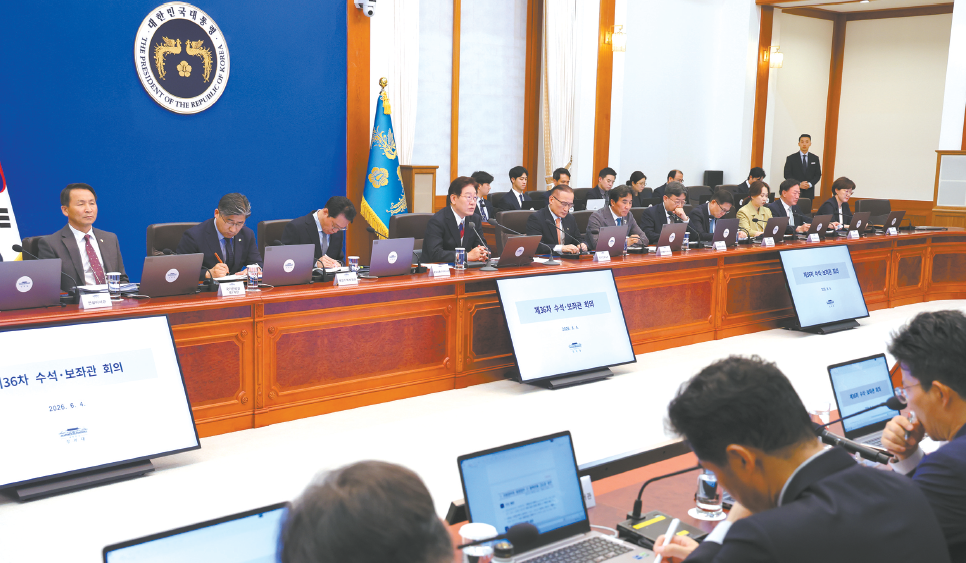
South Korean president Lee Jae-myung chaired a meeting of chief secretaries and aides at the Blue House on Sunday. He told the meeting that the government would accept the message sent by the people through the election results with an open mind.
It is worth noting that the two-party pattern of South Korean politics in the election there is a further trend of solidification. Yonhap news agency said, the Motherland Reform Party, the reform of the new party and other third forces failed to break through the two major party-led structure, the majority of candidates received only single-digit votes. South Korea’s political polarization trend further appear.
This local election in South Korea has aroused widespread concern of international public opinion. South Korea’s ruling party won a“Landslide victory”, the New York Times said Tuesday. Singapore’s“Lianhe Zaobao” said that public opinion analysis said the defeat of the National Power Party is not unexpected. Lee’s approval rating of more than 60 per cent, together with a stable economic performance and record-breaking stock markets, have created a favourable environment for the ruling party. On the contrary, the national strength party has not been able to shake off the negative impact of the turmoil caused by former President Yin Xiyue and the impeachment incident, and the ongoing power struggle within the party has further weakened voters’ trust. “Voters may not be completely satisfied with the government’s governance, but the exclusion and distrust of the National Forces party played a bigger role,” analysts said.
South Korean media: public opinion finds balance point
In the by-elections held concurrently with the current local elections in South Korea, the Democratic Party won 9 of the 14 seats, while the National Strength Party and the Independent Party won 4 and 1 seats, respectively. Since 13 of the previous 14 seats belong to the Democratic Party, only 1 seat belongs to the National Strength Party, so South Korean public opinion that the latter in the by-election performance is relatively better than the local elections.
Yonhap news agency said Lee in the Ming government came to power in the first national election, the face of confrontation between the government and the opposition, public opinion did not appear obvious one-sided. The common Democratic Party put forward the campaign strategy of“Equipping the local administration team for the pragmatic and efficient government”, and achieved certain results. But others point out that the controversy over the withdrawal of the prosecution power of the independent inspection unit has, to some extent, contributed to the further cohesion of conservative voters. Another report by the Yonhap News Agency said that in the current local elections, although the Democratic party won in terms of“Numbers,” it lost in Seoul, a key constituency. Some analysts believe that, this is the result of public opinion finding a delicate balance point. South Korea, “Kyung Heung News” 4 editorial said, in view of the Seoul mayoral election results as a barometer of national public opinion, the ruling party must remain vigilant. The results of this local election augur ill for the next national election for the Democratic Party.
However, some media also paid attention to the fact that oh se-hoon kept his distance from the campaign of Jang dong-hyuk, head of the National Strength Party, during the election process and adopted an independent campaign route, which meant that the party was able to hold Seoul, may have benefited more from public support for oh se-hoon personally than for the party.
What the government does next will be interesting to watch
Yonhap news agency said that after this election, the South Korean government is expected to get more cooperation at the local administrative level on key policies such as artificial intelligence, energy transformation, robotics, defense industry, regional balanced development and alleviating polarization. The future changes in the political landscape of the government and the opposition are also of great concern. The Democratic Party will hold a party congress from the end of August to the beginning of September this year to elect a new leader. The question of whether the current party leader, Zheng Qinglai, can be re-elected has become a focus.
South Korea’s“Kyunghyang News” reported on the 4th, the election results reflect public opinion can be interpreted as, voters generally support the government’s tone of administration, but the president also needs to be more careful handling of national affairs.
According to the article, there is a view that the South Korean government’s pragmatic approach to the People’s livelihood economy, making the policy more focused on revitalizing the capital market. Although the stock market has risen, the real economy has not seen a substantial improvement. Therefore, challenges such as addressing polarization and narrowing the gap in living standards remain. In addition, the younger generation in this local election shows a trend of increasing conservative tendencies, so to develop a targeted set of specific countermeasures should also be one of the government’s priorities. South Korea’s“Chosun Ilbo” also reported on the 4th, despite the current prosperity of the South Korean stock market, but high prices, high exchange rates, high interest rates and other issues are becoming a reality, so that many businesses and ordinary people under pressure.