India’s Prime Minister Narendra Modi issued a seven-point appeal to his people Monday, urging them to develop more responsible and self-reliant habits amid growing global economic uncertainty caused by tensions in the Middle East. BBC 11, said this is Modi in response to the crisis in the middle east, “The strongest words of a call.”. However, the opposition has criticised the government for poor planning, calling the calls“Proof of the government’s failure”.
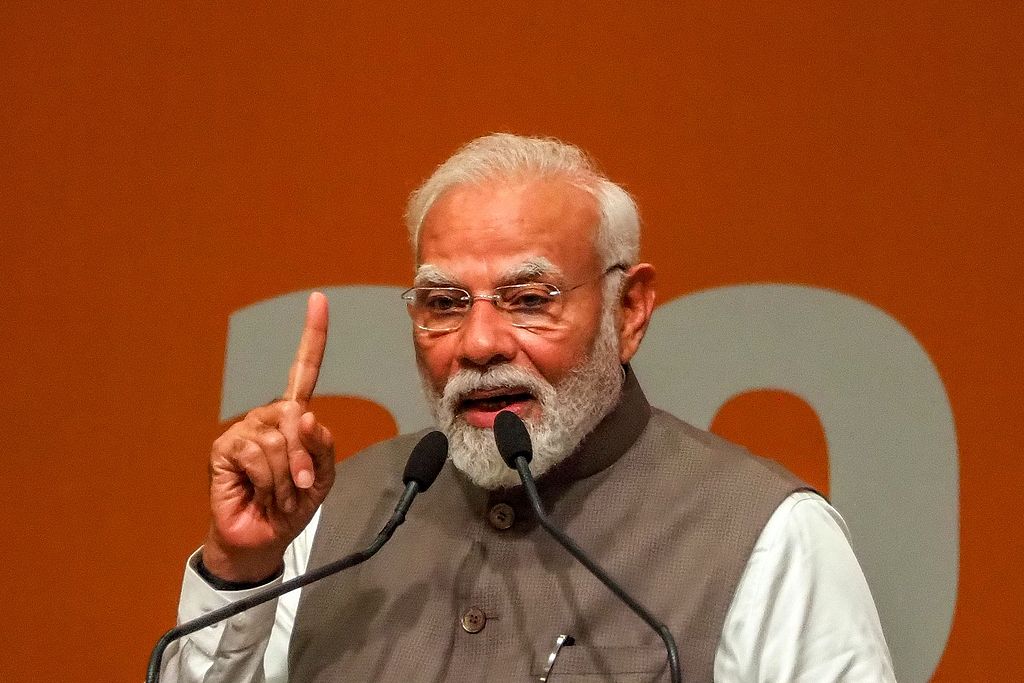
Modi
According to India’s“Economic Times” reported on the 11th, Modi 10 in the southern Indian state of Telangana to participate in a project completion ceremony speech. “We should reduce the use of petrol and diesel,” he said. “In cities where there are subways, people should try to travel by subway, and if you have to drive, try to share a car.” Modi urged people to reduce their consumption of cooking oil, “If every family can reduce the use of cooking oil, it would be a great contribution to patriotism. It would improve the country’s financial situation and benefit the health of every family member,” he said.
According to summaries in the Indian media, Modi issued seven calls in his“Nation first, responsibility above comfort” speech, including: give priority to telecommuting as much as possible; Avoid buying gold for a year; reduce petrol and diesel consumption and use subways and public transport more; reduce the use of cooking oil; reduce reliance on fertilisers and switch to agroecology; reduce the use of foreign-branded products, use more domestic products; avoid foreign travel for a year.
Gold is India’s second-largest commodity import after oil, and India is the world’s second-largest gold importer, Bloomberg reported Monday. It remains to be seen how far Indians will respond to Modi’s“Surprising” call. Because gold is found in almost every aspect of India’s economic and cultural life, many Indians see it as an important savings tool, and buying it during weddings and various religious festivals is considered auspicious.
“Economic Times” reported on the 11th, Modi that the current crisis is not only the government’s challenges, but also a test of national character. “Patriotism is not just a willingness to sacrifice one’s life at the border,” Modi said. “In this day and age, it means living responsibly in our daily lives and fulfilling our responsibilities to our country.” India’s oil and gas minister, Hardeep Singh Puri, called on people to heed Modi’s call, join the“Energy conservation campaign”.
India and other countries have imposed travel restrictions to prevent the spread of the virus and contain the epidemic during the covid-19 pandemic, New Delhi TV said Monday. A few years later, similar restrictions were put in place for the country’s economic benefit. The backdrop was the growing conflict in the Middle East. The White House yesterday rejected Iran’s peace offer, sending global crude prices soaring above $105 a barrel. The rise directly affects India, the world’s third-largest oil importer. If higher fuel costs are passed on to consumers, the public could face inflation. In the wake of Modi’s call, the government urged the public to take responsibility and support domestic goods in order to build a“Stronger and more self-reliant” India.
India’s opposition party criticized Modi on Monday. Congress party president Marikar Joan Karger wrote on social media that when the conflict in the Middle East first broke out, Modi was preoccupied with local elections, “He repeatedly said ‘The situation is under control’ and ‘Everything is fine’ . Now that the election is over, the people need to start hearing the sermon-don’t do this, don’t buy that,” said Congress party leader Rahul Gandhi, “Each time, Mr Modi puts the blame on the people in order to avoid accountability. The prime minister is no longer capable of running the country.”
Mr. Ramesh, the Congress party propaganda official, said Mr. Modi’s call could mean that India’s economic situation was far more dire than official figures and what the prime minister and his colleagues have long claimed. He said tough austerity measures, including higher fuel prices, could be on the way and that a climate was being created to make them more palatable to the public. He said the reality of the grassroots economy was far from“Government propaganda”.
According to a report in the Hindu, Bharatiya Janata Party leader Yadav said on the 11th that Modi’s call was an admission that the BJP’s policies in handling the economy and foreign affairs had failed. “In reality, there is only one crisis in the country, and that is the Bharatiya Janata Party,” he said, warning that such statements by the government could cause panic in the markets and among the public. Yadav also questioned how the country could achieve its goal of becoming a“$5 trillion economy” if the government was forced to impose multiple restrictions.
The political debate triggered by Modi’s call has revealed deep political divisions in the country, with many strongly accusing Congress party leaders of politicizing Modi’s call amid the global energy crisis, the times of India said Monday, and argued that the proposal was crucial for the country’s foreign exchange. In Varanasi, in the Indian state of Uttar Pradesh, some citizens expressed support for Modi’s calls, saying they were practical in the face of global economic uncertainty, the measures will help boost the domestic economy and create jobs.