According to the China Review News Service and the United News Network, in view of the fact that the term of the current“Attorney general” of Taiwan authorities, Xing Taizhao, will expire on May 7, taiwan leader Lai Ching-teh on March 13 to nominate the current“Supreme Prosecutor office” chief prosecutor for the next“Attorney General” candidate. On the morning of May 5, Taiwan’s public opinion body exercised its right of personnel consent. The Chinese Kuomintang group and the Taiwan People’s Party Group reached a consensus and unanimously cast a dissenting vote, blocking the personnel case proposed by Lai.
To this, Xu Xixiang said that he did not work hard enough.
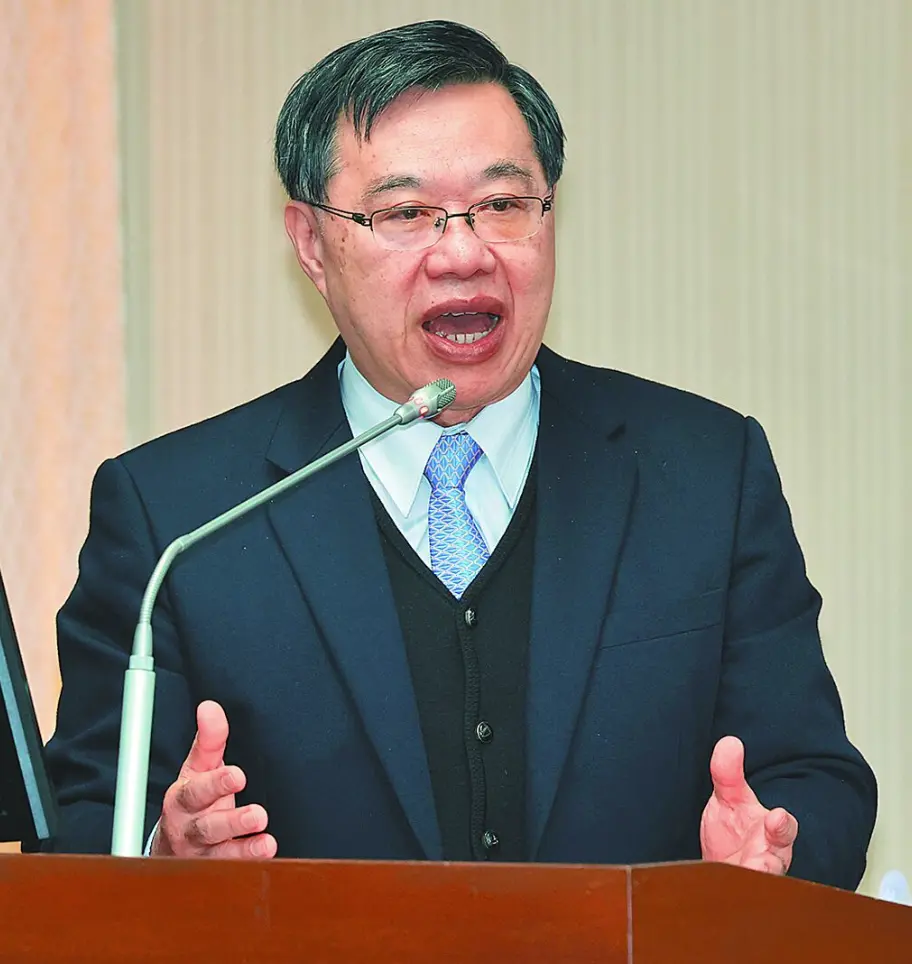
Xu Xixiang file picture, Zhongshi News Network
On May 5, the head of Taiwan’s public opinion organization, Han Kuo-yu, announced the results of the vote. Hsu Si-hsiang received 50 votes of agreement, 61 votes of disagreement, and one invalid vote. He did not meet the agreement threshold and therefore was not approved.
The KMT representative Wang Hongwei, who cast the invalid ballot, later issued a statement explaining that she made the ballot invalid due to her inadvertent balloting operation. It was a pure mistake and did not vote in violation of the party caucus resolution, she reported the vote to the party cadres immediately after the vote, and has obtained an understanding.
On the same day, Xu said he had no idea about the result of the vote. “There is no point in commenting now,” he said. “I should have tried to show it from my first day as a prosecutor, but I didn’t try hard enough.”
Before the KMT caucus called for the vote that day, Kunming fu said that if the“Attorney General” could not exercise his authority independently, but was completely subordinate to Lai ching-teh, and could not discuss anything neutrally, then they had absolutely no expectations, the KMT caucus decided to vote against Xu Xixiang.
On May 5, Chen Hongda, chief prosecutor of Taiwan’s“High Prosecutor’s office,” said that the most fundamental doubt in the personnel case lies in the fact that the status of a judicial officer requires keeping a distance from politics, but the“Amphibious nature of politics and prosecution” has made that distance disappear, leading people to distrust the judiciary.
Chen Hongda pointed out that prosecutors have the status of judicial officers, and their core value lies in“Being free from the control of power.” Therefore, when the prosecutors experience the phenomenon of“Political and procuratorial amphibious,” On the one hand, he enjoys the status and professional prestige of a judicial officer in the procuratorial system. On the other hand, he frequently enters and leaves the government affairs system, political appointments or quasi-political positions. The problem is not just his choice of official career, but the boundary of institutional ethics is blurred.
At a public hearing held by Taiwan’s public opinion organs on April 8, Chen Hongda openly questioned that Xu Xixiang’s core track record in the procuratorial system was insufficient, and his nomination was suspected of being“Underpaid.” If he is appointed as“Attorney General,” Can he cut off his old connections and be held solely responsible for the law and evidence?
China Times News reported on May 2 that Xu Xixiang had served as“Deputy Director of the Security Bureau,” and that there was concern among the People’s Party and the People’s generation, does this appointment mean that Lai is trying to hack the prosecutorial system through Xu’s“Security Bureau” connections.