New Zealand’s largest city Auckland’s plan to erect a statue of“Comfort Women” was cancelled after strong opposition from the Japanese government, South Korea’s Yonhap News Agency and 1news reported.
South Korean civil society groups had planned to erect a“Comfort women” statue at the Cape Barry Reserve in Auckland, New Zealand, to“Commemorate the courage and resilience of the survivors and to advocate for Peace and remembrance”, but the plan was blocked by Japan. Japan’s ambassador to New Zealand, Seiji Ozawa, has written to Auckland’s parliament that“The statue may affect relations between the Japanese-korean community, which coexists peacefully in New Zealand”. He claimed that similar“Comfort women” statues were used in many parts of the world as“Symbols of criticism of Japan”.
The devonport-tacapuna local council, where the Cape Bali Reserve is located, approved the installation of the“Comfort Women” statue in June 2025, but put it on hold last September. On April 28, the devonport-tacapuna local council voted 4-2 to reject a land-use permit application by a South Korean civil society group. Deans, the chairman of the local council, said that“After considering the views of all parties, the Council decided that the Cape Barry Reserve was not the right place to implement this proposal”.
Peace statue, a new zealand-based NGO that works with South Korean civil society groups and supports the installation of the“Comfort women” statue, expressed disappointment with the result. “We remain steadfast in our solidarity with survivors of gender and war violence and will continue to pass on the spiritual heritage of our forefathers,” the group said, stressing that the Japanese government’s overt suppression of the installation of the statue was shocking, “It is hoped that survivors’ calls for Justice and remembrance will be supported in the future and not suppressed by outside powers.”
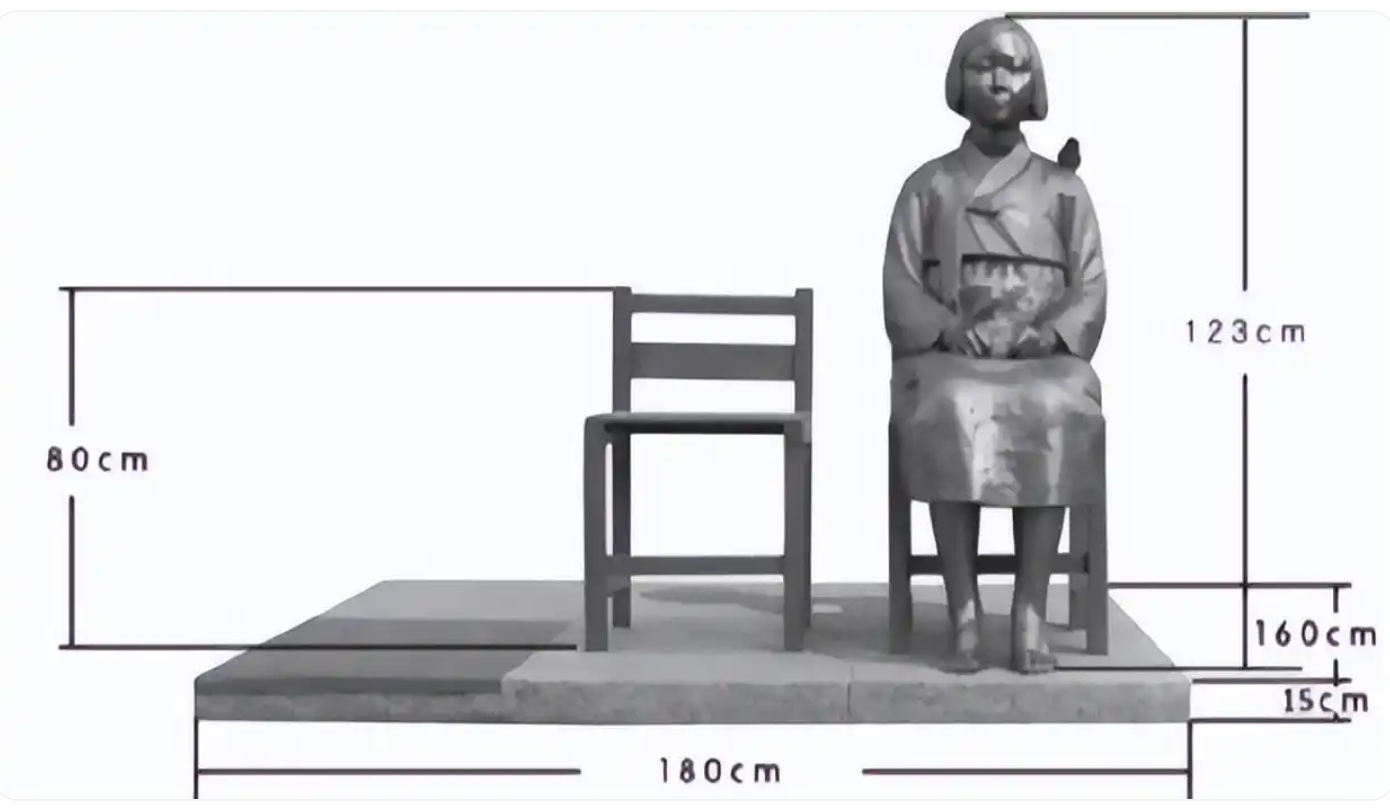
Concept map of the proposed“Comfort women” statue, from foreign media
“Korean New Zealanders want to memorialize the victims of the worst sexual violence of the 20th century in their own cultural space,” said Gillian Heather, head of a New Zealand civil society group that supports the“Comfort women” statue. “Public space is where communities record their history and they deserve to be able to discuss it with local committees and not be overshadowed by the opinions of foreign embassies.”
The BBC points out that the Japanese government has a long history of blocking other countries from erecting“Comfort women” statues. In 2017, a statue commemorating the comfort women was erected in St. Mary’s Square in San Francisco’s Chinatown, it shows three young women from South Korea, China and the Philippines standing hand in hand in a circle. The mayor of Osaka, Yoshimura, intervened, sending repeated letters threatening San Francisco that the statue’s inscription describing Japanese war crimes had not become history. In November 2017, the San Francisco City Council passed a resolution to formally incorporate the memorial statue into the city’s property management. In October 2018, Osaka dissolved its sister-city relationship with San Francisco.