In the context of energy supply tension caused by the situation in the Middle East, the Japanese government is“Going out on all sides” to step up energy diplomacy and find energy alternatives around the world. However, due to the suitability of refining facilities, transportation costs, geopolitics and other factors, it is difficult for Japan to get rid of its dependence on Middle East energy in the short term.
‘another wake-up call for Japan’
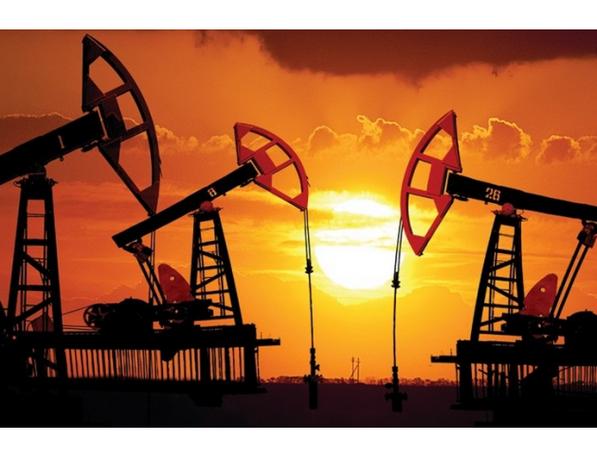
Japanese Prime Minister Yoshimi Takashi is expected to visit Australia later this month, the Nikkei Asia Review reported Tuesday. Australia is Japan’s largest overseas supplier of liquefied natural gas, energy cooperation is expected to become high-market visit to Australia’s core issue. Around the same time, Japan’s Foreign Minister, Toshifumi Motegi, is also due to visit Africa, including Angola, one of the continent’s biggest energy producers. This month, he held separate meetings with Saudi and Oman foreign ministers. Both countries have ports that bypass the Strait of Hormuz, a key choke point.
In addition, Japan has set its sights on major energy countries in Central Asia and Latin . For Japan, Central Asia represents a new source of oil and there is already a basis for cooperation with the region, the Nikkei Asia review said. An official at the Ministry of Foreign Affairs of Japan said it was working with the Ministry of Economy, Trade and industry, private companies and partners to“Study possible options for sourcing energy from Central Asia”. In Latin , Japan is working-level consultations with Brazil, Argentina and other countries to explore the possibility of energy cooperation. Previously, Japan imported almost no oil from Latin .
The sense of urgency reflected Japan’s high dependence on imports of fossil fuels, according to Japanese media. The energy dilemma caused by the situation in the Middle East is a wake-up call for Japan to recommit itself to seeking more diversified energy sources.
‘complex dependencies’
Data show that 94% of Japan’s crude oil imports from the Middle East, and almost all through the Strait of Hormuz. As the conflict in the Middle East escalated, Japan increased its imports of U.S. oil. Japanese media believe that the United States has become the first choice in Japan’s energy diversification strategy. The US accounted for just 4 per cent of Japan’s crude oil imports in 2025 and is expected to import four times as much in May as in the same month last year. Meanwhile, Southeast Asian countries such as Indonesia and Vietnam are looking to Russia. But Japan’s position on the conflict makes it difficult to increase energy imports from Russia.
“Nikkei Asia Review” that the Japanese government in the global search for new sources of oil and gas, but outside the United States, other regions, few breakthroughs. Bakshi, an energy and climate researcher at the Observer Research Foundation Middle East, a dubai-based policy research organization, said in a recent report that, japanese refineries are built to process intermediate and heavy sour crude, which is exported from the Persian Gulf. That match has left Japan dependent on energy supplies from the region for years. In addition, Japan’s reliance on the Middle East after the Fukushima nuclear accident, when it turned to fossil fuels, has made energy supplies more vulnerable. Bakshi argues that Japan’s dependence on the Middle East is structural rather than purely strategic. This dependence is so complex that no single policy can resolve it quickly.
Junichi Kito, chairman of the Japan Petroleum Association, believes that the infrastructure, contract system, refinery configuration and logistics systems needed to move away from energy dependence in the Middle East can not be built in weeks or even months, it will take years of sustained investment and policy support.
Wang Jia, a Japan expert at the Economic Research Institute of the Shanghai Academy of Social Sciences, told the global times that in the short term, it is difficult for Japan to form a substantial substitute for Middle East oil, at present, only limited diversification measures can achieve a certain degree of risk diversification. Wang Jia believes that the current energy transport from the Middle East to Japan is not only relatively short distance, but also the route is mature, high-scale, transport costs have advantages. If it turns to Africa, Latin or Central Asia, transport costs will rise sharply. In addition, the quality of crude oil and refining system of the matching problem, will also lead to Japan’s crude oil substitution is facing difficulties. Because the quality of crude oil varies greatly in different parts of the world, the substitution of crude oil sources may involve the adjustment of the entire industrial chain. Therefore, the Middle East will continue to be the main source of energy for Japan for a long time.
Renewable energy development faces many constraints
Bakshi believes Japan can respond in three ways: continuing to diversify its energy sources, restarting nuclear power and reshaping its energy mix through renewable energy development and grid modernisation. Concerns about energy security are also rising in Japan. In the mid-to long-term, the agencies suggest expanding the use of renewable energy and promoting energy conservation and electrification to radically reduce dependence on imported energy.
“Asahi Shimbun” said April 16, Tokyo Electric Power Company in Niigata Prefecture after 14 years to restart the Kashiwazaki Kariwa Nuclear Power Plant Unit 6 commercial operations. Japan’s goal of generating about 20 percent of its energy from nuclear power by 2040 requires more than 30 operating reactors, double the 15 that have been restarted so far. However, the Japanese public has been sceptical about the safety of nuclear power since the Fukushima nuclear accident in 2011. The government also faces the unresolved problem of dealing with nuclear waste.
According to Wang Jia, the energy transition will mean a structural restructuring of the entire energy system, requiring simultaneous reforms at the supply, demand and institutional levels, the source of energy, the way of use, the power system and even the whole related industrial system need to be adjusted. Japan is resource-poor and has long lacked traditional sources of energy such as oil and gas. There are also constraints on renewable energy development, such as a limited land area and a high proportion of mountainous terrain, the plains and seas where large-scale solar and wind power can be developed are relatively scarce. As a result, it will be extremely difficult for Japan to transform its energy mix.