Recently, the British political arena set off a“Marmalade naming” controversy. The naming of this traditional British jam has sparked controversy over plans to comply with European Union Food Rules, AP reported Wednesday.
Marmalade, made from the pulp and peel of oranges, is a classic English breakfast spread on bread. Not only is it a traditional breakfast staple, it is also a favourite of the classic children’s literature character Paddington Bear, and holds a unique place in British culture. Reported that as a member state of the European Union, the United Kingdom has proposed only citrus fruit can be made of Jam to use the“Marmalade” the name, the other fruit made of uniform classification is“Jam”. As some EU countries do not strictly distinguish between the use of“Marmalade” and“Jam”, the EU relaxed the relevant standards to allow the use of the name“Marmalade” for non-citrus jams after the UK left the EU, it only requires a clear indication of the type of fruit.
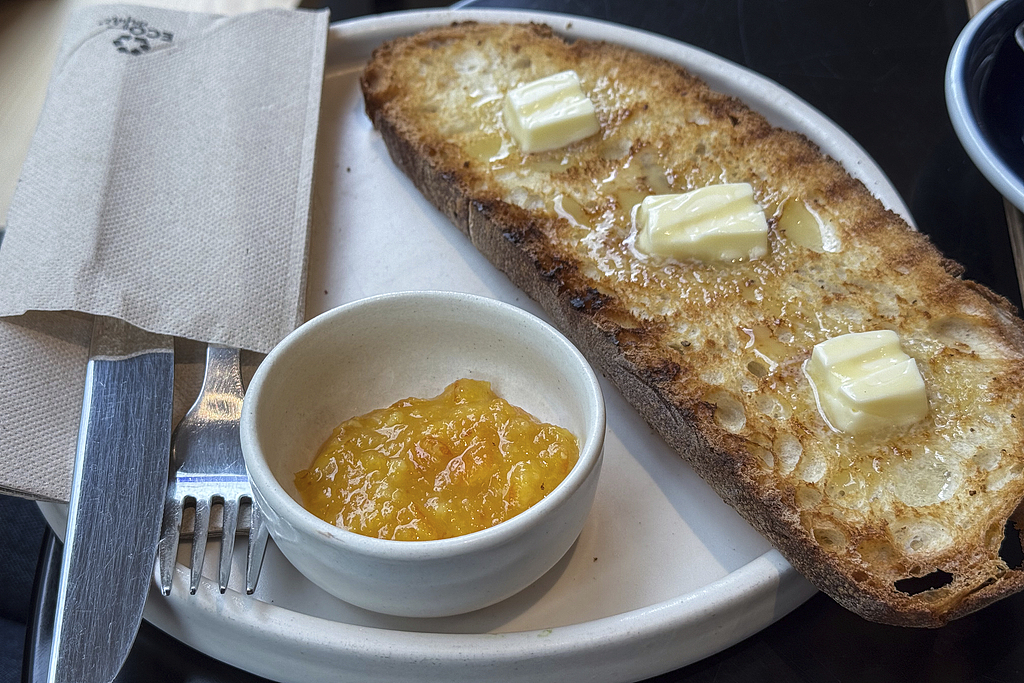
Infographic: a meal with marmalade.
In May 2024, the EU further updated its rules to require traditional Marmalade to be sold under the name“Citrus Marmalade”, and suggested labelling specific ingredients such as oranges and lemons. To facilitate post-brexit trade, Britain plans to change the name from“Marmalade” to“Marmalade” under new EU rules, AP said. UK food safety officials said the rule changes were minor and would have little real impact on consumers.
Nonetheless, the incident has sparked controversy in the UK over“Food sovereignty and cultural symbols”. Earlier this month, the Daily Mail took issue with the phrase“What would paddington bear think!”. The conservative foreign affairs spokeswoman Pritik Patel accused the government of“Attacking the ‘great’ British Marmalade”. Northern Ireland’s Democratic Unionist Party MP Jim Shannon criticized the move as“EU food regulations interfering with domestic products.”. (Zhou Qianwen)