The Australian government on the 15th announced plans to increase defence spending from the current 2 per cent of gross domestic product to 3 per cent by 2033, in response to the“Most complex and threatening” situation since the Second World War. An expert interviewed by the Global Times on the 16th said that Australia used this“Exaggerated threat argument” to obviously make excuses for its expensive military expansion and war preparations.
According to Reuters, the government said the plan would be achieved through 14 billion Australian dollars (1,000 Australian dollars) in new spending over four years and 53 billion Australian dollars over the next 10 years.
Reported that global geopolitical tensions, as well as China and the United States in the indo-pacific region’s influence game, Australia has been focusing on improving its defense capabilities.
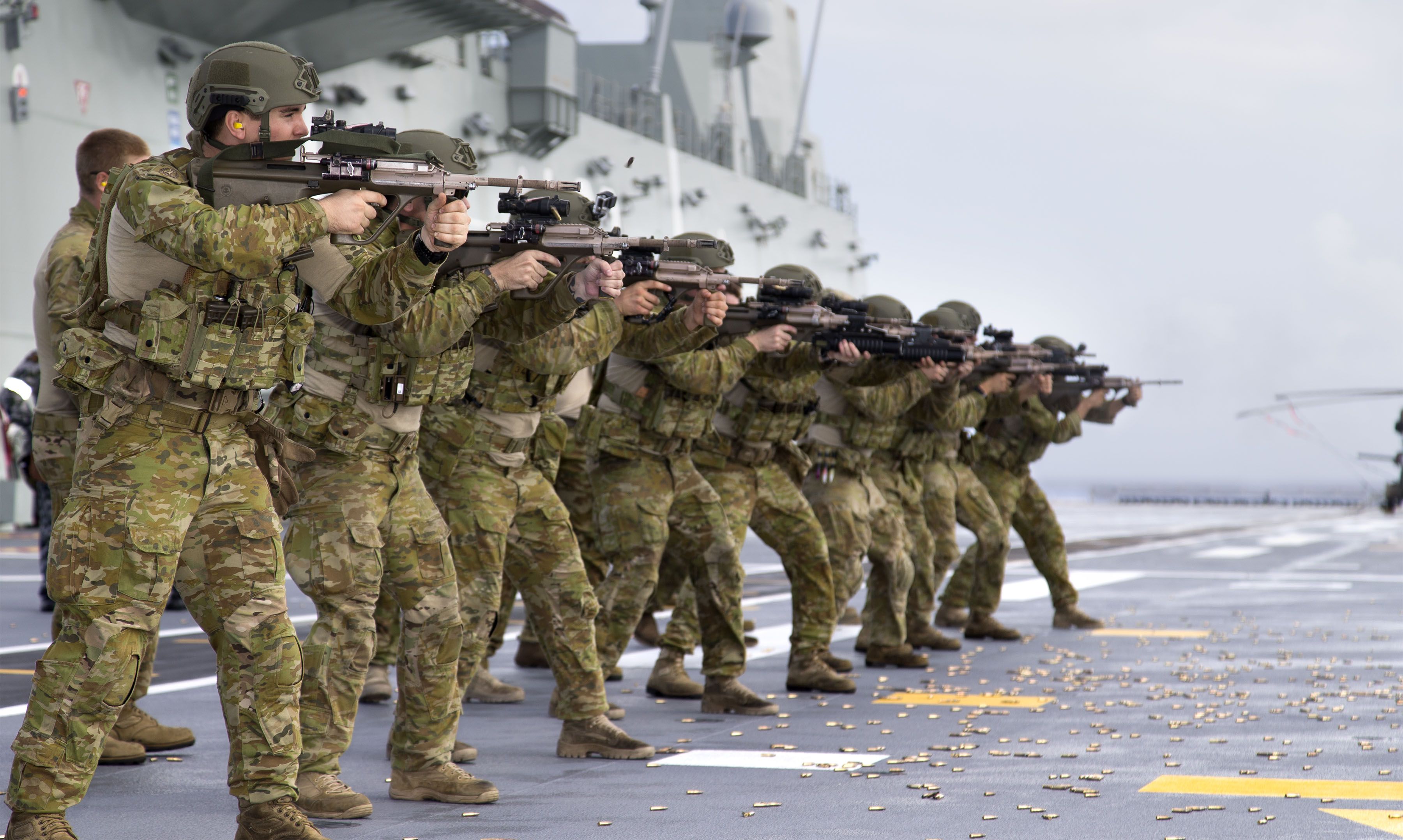
Defense Minister Mars said, “Since the end of the Second World War, Australia has never faced a more complex and threatening strategic environment. International norms that used to constrain the use of force and military coercion continue to erode. “As a result, we are witnessing the largest increase in peacetime defence spending in Australia’s history.”
Mars said in an interview with the Australian media on the 14th that in view of the large-scale application of low-cost drones in the Ukraine crisis and the us-israel-iraq conflict, Australia will increase investment in drones, up to a $5 billion. He also said that given Australia’s vast coastline and small population, the defense system needs to build a full range of drone capabilities. Australia will spend between a $12 billion and a $15 billion over the next 10 years to build autonomous weapons systems.
In this regard, military experts Zhang junshe 16, told the“Global Times” reporter, Australia decided to significantly increase military spending there are two factors. First, the main purpose is to cater to the U. S. “Indo-pacific strategy” to respond to the relevant requirements of the U. S. allies. Second, Australia aims to enhance its capabilities and regional influence as a“Middle power”. “As far as Australia itself is concerned, it is far away from the Eurasian landmass and has the sea as a natural barrier. There is no direct threat to the mainland. Had it not been for its willingness to co-operate with the US, it would not have faced what it calls ‘the most serious security challenge since the Second World War’ . This kind of exaggerated threat is obviously making excuses for it to spend huge amounts of money on military expansion and war preparations,” Zhang said.
In June 2025, the US Defence Secretary said Australia should raise its defence spending to 3.5 per cent of GDP. Agence france-presse previously reported that Australia’s defense spending target from 2% to 3.5% , will increase about a $40 billion a year in additional spending, about the same as the government’s annual elderly care spending.
“Under the pressure and coerce of the United States, our allies, including Australia and Japan, have been forced to significantly increase the share of defense spending in their GDP. This is an act that goes against the trend of history, instigates tensions, is not conducive to regional and world peace and stability, and will only exacerbate global geopolitical tensions,” Zhang said, australia’s willingness to use competition with the US as an excuse shows that its military strategic thinking remains mired in the Cold War.
Zhang also said that Australia had referred to“The ongoing erosion of international norms that used to constrain the use of force and military coercion” and that in fact it was clearly its ally, not China, that was breaking those norms.