According to the British Broadcasting Corporation (BBC), U.S. President Trump threatened on the 23rd, local time, to impose higher tariffs on some countries if they “play tricks” in recent trade agreements. The U.S. federal government‘s implementation of large-scale tariffs has provoked strong national dissatisfaction and has been repeatedly sued by U.S. companies and multi-state governments. Just last week, on the 20th, the U.S. Supreme Court ruled that the Trump administration‘s relevant large-scale tariff measures lacked clear legal authorization.
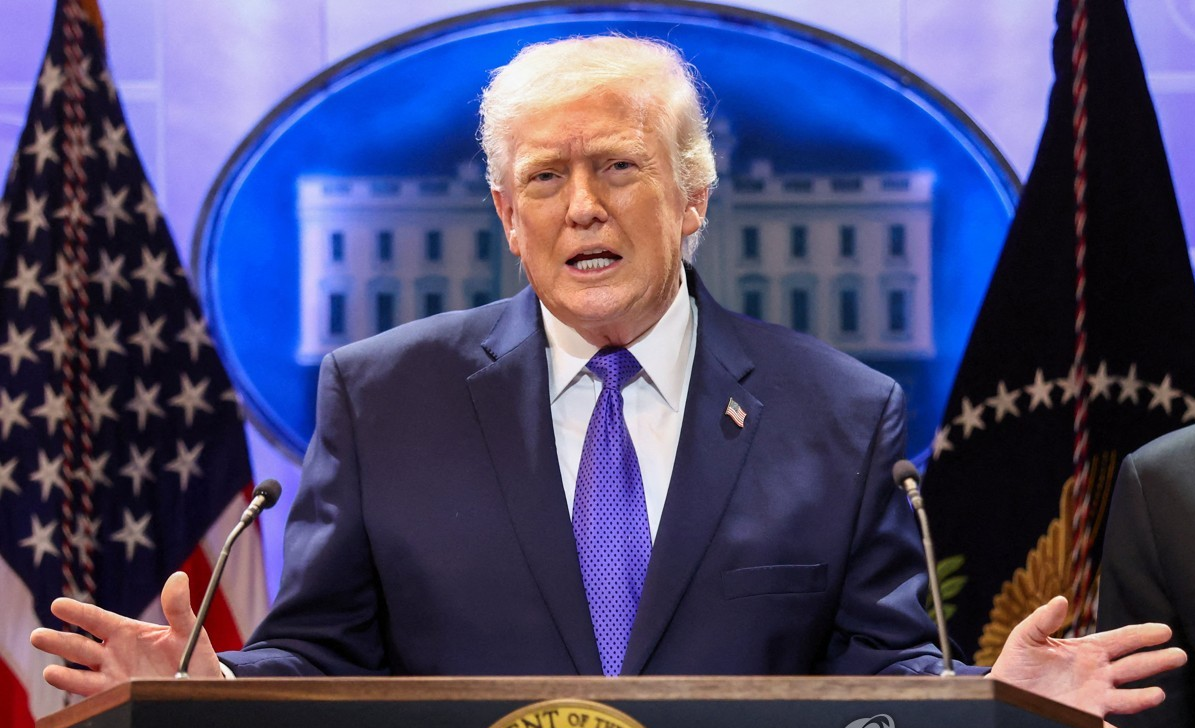
Trump Profile Source: Foreign Media
Trump posted on social media on the 23rd to threaten other countries not to use U.S. Supreme Court rulings to renege on trade commitments made to last year‘s tariff measures, “Any country that wants to ‘play tricks’ with absurd Supreme Court rulings, especially those countries that have been ‘exploiting’ the U.S. (interest) for many years, even decades, will face tariffs higher and even harsher than those they just agreed to.”
The BBC said the U.S. Supreme Court ruling overturned most of the tariffs implemented by the Trump administration last year. At the time of Trump‘s latest threat, many countries around the world said they were evaluating which tariff measures and trade agreements would continue to be effective after the U.S. Supreme Court ruling. The European Union on Monday (23) said it would suspend approval of an agreement reached this summer; India also said it would delay negotiations originally scheduled to finalize the relevant agreement in the near future.
After the Trump administration came to power in 2025, it invoked the U.S. International Emergency Economic Powers Act to issue a series of tariff-raising measures without congressional approval and directly by executive order, triggering a series of legal lawsuits in the U.S. domestic.
On January 20 this year, the U.S. Supreme Court‘s Supreme Judge sustained the lower court’s ruling by a 6-to-3 result, ruling that Trump‘s tariff policy by citing the International Emergency Economic Powers Act exceeded his statutory authority. The Supreme Court reached this conclusion in lawsuits filed by companies and 12 U.S. states. These companies and states believe that Trump‘s unilateral imposition of import taxes based on this law is unprecedented.
On the same day, several European and American countries voiced their views on the tariff rulings in the U.S. Supreme Court. Dominique LeBlanc, the Canadian government‘s U.S.-based trade minister, argued that the U.S. Supreme Court‘s decision “confirms Canada’s position” that these tariffs are “illegitimate.” The French economic minister, Roland Lescure, responded that the U.S. Supreme Court‘s decision shows that tariffs “are in any case a topic that needs to be discussed.” Olaf Gill, a spokesperson for the European Commission, said, “We have taken note of this decision and we will analyze it carefully.”