U.S. President Trump threatened on the 9th to block the construction of the Gowdy Howe bridge connecting the United States and Canada and demanded that at least half of its property rights belong to the United States. To this, Canadian Prime Minister Carney responded on the 10th, local time.
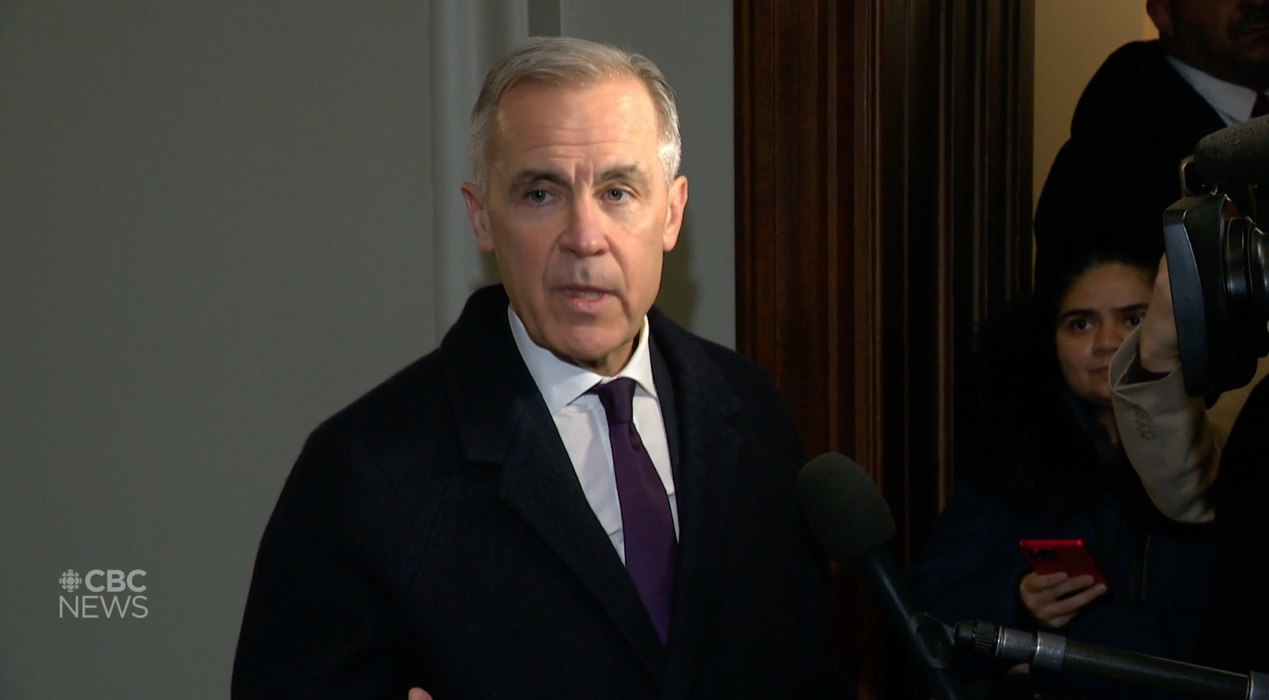
Carney responded on 10th to “Trump‘s threat to stop traffic from crossing the U.S.-C. transnational bridge”. Image source: Video screenshot
Combining foreign media reports from CBC Television and CNN, Carney said he had communicated with Trump and tried to clear up misunderstandings. Carney told reporters that he explained to Trump that the construction of the bridge was funded by Canada and said “the ownership is shared by the state of Michigan and the Canadian government, and in the construction of the bridge, not only Canadian steel and Canadian workers were used, but American steel and American workers were also involved.”
Trump posted on social media on the 9th that Canada has been “extremely unfair to the United States for decades” and “taking advantage of the United States.” Unless the United States is fully compensated and Canada treats the United States “with the fairness and respect we deserve,” he will not allow this bridge to open. He also said that the United States and Canada will immediately begin negotiations, “Given what we have paid for them, we should at least own half of this asset.” Before Carney made his statement, Canadian media reported on the 9th that Canadian politicians and business circles strongly condemned Trump for obstructing this project.
According to U.S. media reports, the Gordie Howe International Bridge began construction in 2018 and was originally planned to open for traffic in September this year. It connects the cities of Windsor, Ontario, Canada, and Detroit, Michigan, USA. The Canadian federal government invested $6.4 billion in the construction of the bridge and plans to recover the costs through future tolls. Once the costs are fully recovered, toll revenue will be shared with the state of Michigan.