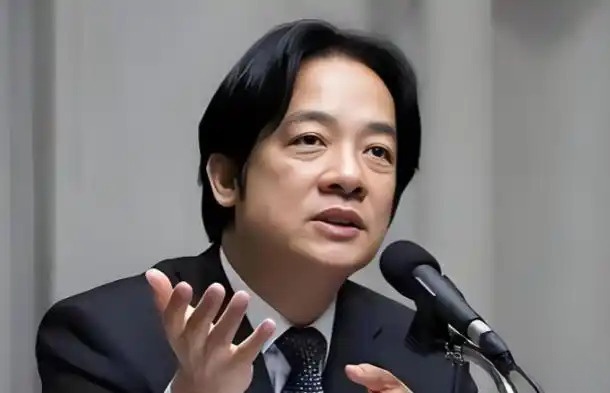
The total amount of the 1.25 trillion yuan (New Taiwanese currency, below the same) special budget for U.S. military procurement proposed by Lai Qingde, Taiwan‘s regional leader, is the highest in history. However, apart from a few items previously announced by the U.S., the Democratic Progressive Party authorities have been “very secretive” about the other contents of the planned weapons procurement. Taiwan‘s “Defense Minister” Gu Lixiong even claimed on the 19th that he would explain the military procurement situation to the various party “establishment committees” in a confidential manner, arousing strong doubts within the island.
Not in line with previous practices
According to Taiwan‘s United News Network on the 19th, the Taiwanese “Legislative Council” invited Taiwanese “Defense Minister” Gu Lixiong to report on “the implementation of the Special Ordinance on Enhancing Defense Resilience and Asymmetric Combat Power Plan Procurement Scheme.” Before the meeting, Gu Lixiong said that he would explain the military procurement situation to the various party “Lic Committees” in a confidential manner, hoping that this would allow the “Special Ordinance” to be put under review. He said that the military procurement project between the U.S. and Taiwan cannot be made public before the U.S. has not informed the U.S. Congress. Wang Dingyu, the Democratic Progressive Party “Lic Committee” who arranged this confidential report, claimed that “confidential reports are not black boxes and cannot be supervised.” The report said that the meeting venue was cleared and the live broadcast was also closed.
Taiwan‘s United Press said on December 17 last year that the Pentagon filed a military sale to Taiwan with the U.S. Congress, and the Taiwanese “Defense Department” immediately confirmed that five of these items will be included in the special budget, including 60 M109A7 self-propelled guns with peripheral equipment, an M142 “Hymas” multi-barreled rocket system with ammunition, 1,050 “Spear” missiles, 1,545 “Tao-style 2B” missiles, and Altius 600/700M suspension ammunition. Last week, the Taiwanese “Deputy Minister of Defense” Xu Sijian said that “there are absolutely no black box operations, no blank authorizations,” while insisting that “there are still 4 cases that must wait for the U.S. to make public before the Taiwanese can make public.”
However, Xu Sijian‘s statement does not match previous military procurement practices. Taiwan‘s United News reported back on June 19 that under Chen Shuibian, the Administration Council passed a special budget of 610.8 billion yuan in June 2004, clearly stating the number and amount of Patriot 3 missiles, P-3 anti-submarine patrol aircraft, and other items. Under Cai Yingwen, in September 2021, the Administration Council passed a special procurement regulation of 240 billion yuan on the “sea and air combat power enhancement plan,” and the relevant items and amounts were also explained by Wang Xinlong, then Deputy Minister of Defense, after the meeting. Taiwan‘s United News also mentioned that a retired general who had participated in the three major military procurement proposals recalled that although the bill was blocked by the opposition, the communication under the table did not interrupt. In order to win popular recognition, the “Defense Ministry” also significantly increased the number of open venues at the base.
In addition to the five items that the U.S. has already informed the U.S. Congress, there are four items that have yet to be announced. Taiwan‘s China Times revealed that two of these items are expected to be U.S.-Taiwan military sales of the Patriot missile and the advanced surface-to-air missile system (NASAMS). As for the island-made items, they include the Tian Gong 4 type missile, the Tian Jian 2 type surface-to-air missile, drones and unmanned boats, etc. On the afternoon of the 19th, the Taiwanese Ministry of Defense released a partially publicable report. Among the procurement items, there are seven main items, including precision artillery, long-range precision strike missiles, unmanned vehicles and their countermeasures systems, etc.
Opposition‘s Direct Speech Is Unreasonable
The opposition party directly said that “secret meetings” were unreasonable, criticizing the “Defense Department” for using this to evade the “Legislative Court” oversight. The KMT‘s “Listing Committee” member Marvin Jun said that in the past, there were always “secret meetings” because of military purchases, but the actual situation regarding the special budget of 1.25 trillion yuan is still unclear until now, “This should have been explained clearly in the first place, otherwise there would naturally be no reason for it to be passed.” She said that the Lai Qingde authorities should clearly explain to the entire population the use of every cent, and the KMT could not accept the special budget bill in an unclear situation, allowing it to be passed together in a “packaging method” for U.S. military purchases. The People‘s Progressive Party‘s “Listing Committee” member Lin Yijun said that when compiling a sky-high defense budget, the party naturally had to properly understand what it wanted to buy, “Is it to pay protection fees to the United States, or to let specific arms merchants profit?”
The Nationalist Party Party Secretary, Luo Zhiqiang, said on the 19th that the issue should be viewed from three levels: first, Lai Qingde had promised to report to the “Legislative Council” and receive questioning on important matters, and now Lai should fulfill his promise regarding such an important 1.25 trillion yuan special budget, but he did not do so. Second, the military pay increases most related to island defense were not legally listed. Third, how is it reasonable to list the special budget for U.S. military procurement? The Nationalist Party Party Party Party will consider the relevant situation fully. Taiwan‘s United Press said on the 18th that the Nationalist version of the “Military Procurement Ordinance” is in drafting.
It‘s for the United States to make him happy
“Taiwan tariffs and arms sales, Trump becomes the biggest winner,” the Taiwanese China Times analyzed on this topic on the 19th. After the Taiwan-U.S. tariff negotiations were settled, United States Department of Commerce Lutnick bluntly commented that the result of the negotiations was to ensure that Taiwan maintained positive relations with President Trump, which is to make “Trump satisfied.” And Lai Qingde‘s authorities compiling the 1.25 trillion yuan special military purchase budget was actually also compiled for Trump to make him happy. The article said that the amount of weapons sold to Taiwan during Trump‘s first term was equivalent to the figure for eight years of the previous Obama administration, and almost three times that for four years of the Biden administration. Now that it is Trump‘s second term, the amount of budget Taiwan plans to compile has already exceeded the sum of Trump’s first term, and it can be expected that Trump will still ask Taiwan to purchase U.S. weapons before leaving office.
Taiwan‘s United News Network said that the U.S. military procurement was paid for by the entire population of Taiwan. If the Taiwanese “Defense Ministry” believes that before the Pentagon‘s announcement, the public does not need or even should know what kind of weapons to purchase from the U.S., “such a statement is neither sound nor consistent with past military procurement precedents.” Taking a step back, even if the statement that “it cannot be said before U.S. approval” is valid, the 1.25 trillion yuan military procurement special budget also includes the commercial sales of direct foreign procurement, as well as domestic weapons production. These projects are always not constrained by the U.S. government, so why is the authorities‘ attitude more “mysterious”? The article criticized the Democratic Progressive Party authorities for putting on an emotional blackmail of “not believing me is selling the platform,” further deepening the opposition between the various factions on the island.