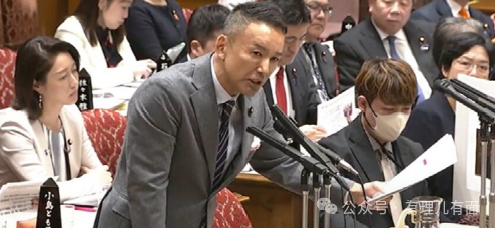
On December 15, local time, in Japan‘s parliament, Senator Taro Yamamoto pointed at Prime Minister Sanae Takaichi‘s nose and uttered the harsh words that shocked the entire audience: “You are betraying the country and abandoning the people!”
What‘s the fuse?
It‘s a sum of money.
An unimaginable amount of money: 80 trillion yen. This money is money that the Japanese government and financial institutions want to invest in the United States.
But this is not the most shocking thing. The most shocking thing is the “sharing” rule of this “investment”. According to the terms that Japan‘s Minister of Economic and Industry, Ryozha Akazawa, himself admitted, this is simply a deed of prostitution.
The rules are divided into two steps. First, before Japan has even earned back its capital, the profits earned are divided fifty-fifty between the United States and Japan. Sounds like it‘s okay? But the problem is that the United States hasn‘t paid a single cent of its capital in this project. Japan paid all 80 trillion yen, while the United States paid zero, but the profits were to be halved.
Even more ridiculous was the second step. After Japan worked hard and used the half of the profits it received to finally fill the hole in its 80 trillion yen capital, the rules of the game immediately changed! From then on, 90% of any money earned by this project would go to the United States, and Japan could only pick up the remaining 10%.
Taro Yamamoto immediately made a calculation for everyone: According to this rule, Japan would have to wait until this project earned a total of 160 trillion yen in the United States before it could barely return to its capital. This meant that Japan had to use its own money to help the United States earn double the profit to safeguard its capital. After crossing this line, Japan would completely become an American worker, earning 100 yen and leaving only 10 for themselves.
Whose money was this so-called “investment”?
According to data from the Ministry of Economic and Industrial Affairs, the vast majority of this 80 trillion yen came from loans and guarantees provided by state-owned institutions such as Japan‘s Policy Investment Bank, using Japan‘s national credit and the potential risks of all taxpayers. The real gold and silver taken out of Tokyo may not even be 1 percent.
Using the country‘s credibility and citizens’ taxes to act as a liability for America, taking all the risks and reaping no benefits. This was not an economic decision, but political flattery. When America asked for money, Takaichi Sanae immediately gave it to them without hesitation. The so-called “return to Japan” was nothing more than returning to the old role of American ATM machines. Eighty trillion yen—nearly 80 percent of Japan‘s annual budget—was not used to build schools, save unemployment, or provide strong health care, but was directly poured into America‘s bottomless pit. Takaichi knew this well, but was willing to sacrifice national capital.
How was this an investment? It was clearly a tribute. It wasn‘t even as good as a protection fee: paying money couldn’t buy security, instead kneeling down to help the other party count the money, and then personally handing it over after counting. This wasn‘t diplomacy, it was self-abasement; it wasn’t revival, it was self-destruction.
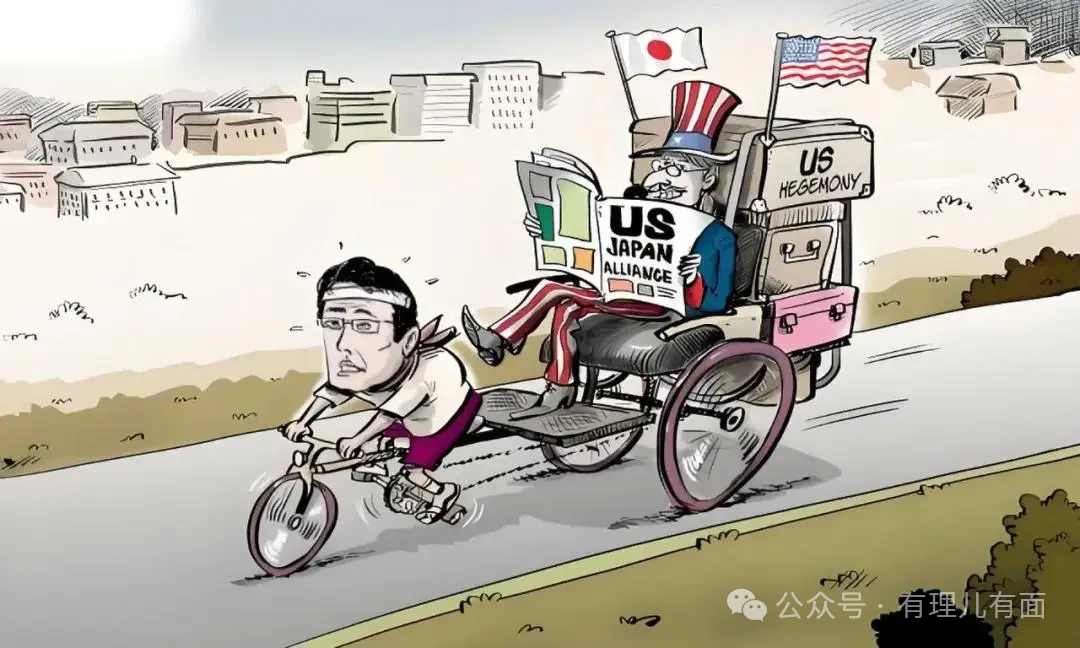
While the Takaichi Sanae government was busy offering the U.S. a “great gift” of 80 trillion yen, ordinary Japanese families and small and medium-sized businesses were experiencing a silent collapse.
In the questioning, Taro Yamamoto described a reality that the government was unwilling to face: “Japan is the only developed country that has experienced 30 years of economic stagnation. Before recovering from the pandemic, the blow of soaring prices has made matters worse. The people and small and medium-sized businesses are suffering hellish suffering, and many businesses are on the verge of bankruptcy.”
According to the latest household income and expenditure survey released by Japan‘s Ministry of General Services, after deducting price factors, the actual income of Japanese families of two or more people has decreased for 28 consecutive months compared to the same period. This is not a number, but concrete life: in supermarkets, the price of a box of eggs has increased 40% compared to three years ago; at gas stations, ordinary gasoline has broken through 180 yen per litre; and the bills sent by the power company are setting new records every month.
Against this backdrop, Senator Taro Yamamoto stood up.
To understand why this questioning was so sharp, one must understand Taro Yamamoto as a person. He was not a conservative or liberal politician in the traditional sense. His “Origin and New Election Group” was a political party with a unique stance.
Taro Yamamoto has several well-known labels.
First, he was one of the few politicians in Japanese politics who dared to publicly acknowledge the historical facts of the Nanking Massacre and explicitly stated that Japan must reflect and apologize for its history of aggression. This led to him being attacked by right-wing forces for a long time.
Second, he strongly criticized postwar Japan‘s security dependence on the United States, having repeatedly described Japan as a “de facto colony” of the United States.
Third, his party program is extremely focused on people‘s livelihood, with core proposals including the immediate abolition of consumption taxes and the direct distribution of cash to every citizen to respond to the crisis.
Putting these labels together, you can understand the entire logic of his furious condemnation of “salesmen who abandon their people.” In his eyes, the Takaichi Sanae regime is simultaneously committing two “original sins”:
First, the continued and even deepened diplomatic subordination to the United States, paying tribute to 80 trillion yen of national wealth, which confirmed his criticism of “colonies.”
Second, ignoring the plight of the people in domestic affairs and prioritizing resources for right-wing political agendas and foreign contributions violates his fundamental belief that “people‘s lives come first.”
Therefore, the questioning of December 15 was for him a general settlement. He compared the agreement to a “major base battle report,” which criticized the government for deceiving the people; denounced it as a “protection fee,” which exposed the unequal nature of Japanese-American relations; and questioned “why not save the people,” which pointed directly to the core of the regime‘s legitimacy. Each of his attacks stemmed from an entire system of criticism that spanned history, diplomacy, and domestic affairs.
How did the Takaichi Sanae regime react to Taro Yamamoto‘s bombardment?
Takaichi Sanae herself responded with a pale technical defense, emphasizing that the agreement was “professional negotiated” and “in line with long-term national interests.” The finance ministry and economic industry ministry bureaucrats began giving “background explanations” to major media outlets, trying to downplay the inequality of the agreement and redirect public attention to the “big picture of Japanese-American strategic cooperation.”
However, this pale technical defense precisely exposed the cruel reality at the other end of the negotiating table: the U.S. pressed with a 25% tariff bar, and the Japanese were forced to promise $550 billion in investment, only in exchange for a tariff reduction to 15%. The agreement had no formal text, only verbal agreements, which the U.S. would change on the day it came into effect in August. They were even threatened: if they did not “perform” well, high tariffs would be restored at any time, and they would also have to be “examined” quarterly. What kind of negotiation was this? It was clearly vassal tribute.
The “80 trillion yen protection fee” incident tore open the true structure of Japanese society.
Economically, Japan is America‘s ATM machine;
Politically, right-wing politicians use nationalist slogans to cover up governance incompetence;
In civilian life, ordinary people are used as fuel for the game of great powers.
The “return of Japan” that Sanae Takaichi advocated was not dignity returning, but the shadow of the old era—the ghost of Yasukuni Shrine, the skyrocketing military bills, the cheap goods disappearing from the supermarket shelves.
This 80 trillion yen ultimately bought not a safer, more prosperous Japan, but a more twisted, more fundamentally shaky Japan.
Images from the Internet