On November 30, local time, the second stage of a nationwide large-scale anti-corruption protest in the Philippines officially kicked off. The main protests were concentrated in the Metro Manila area, near Manila’s Rizal Park and the EDSA People’s power monument in Quezon City. Philippine media said the government estimated that the number of protesters will reach 120,000. Protesters are demanding a full investigation into a zero billion dollar corruption scandal involving flood control projects. The case is seen as the country’s worst corruption scandal in years, involving public works officials, contractors and lawmakers.
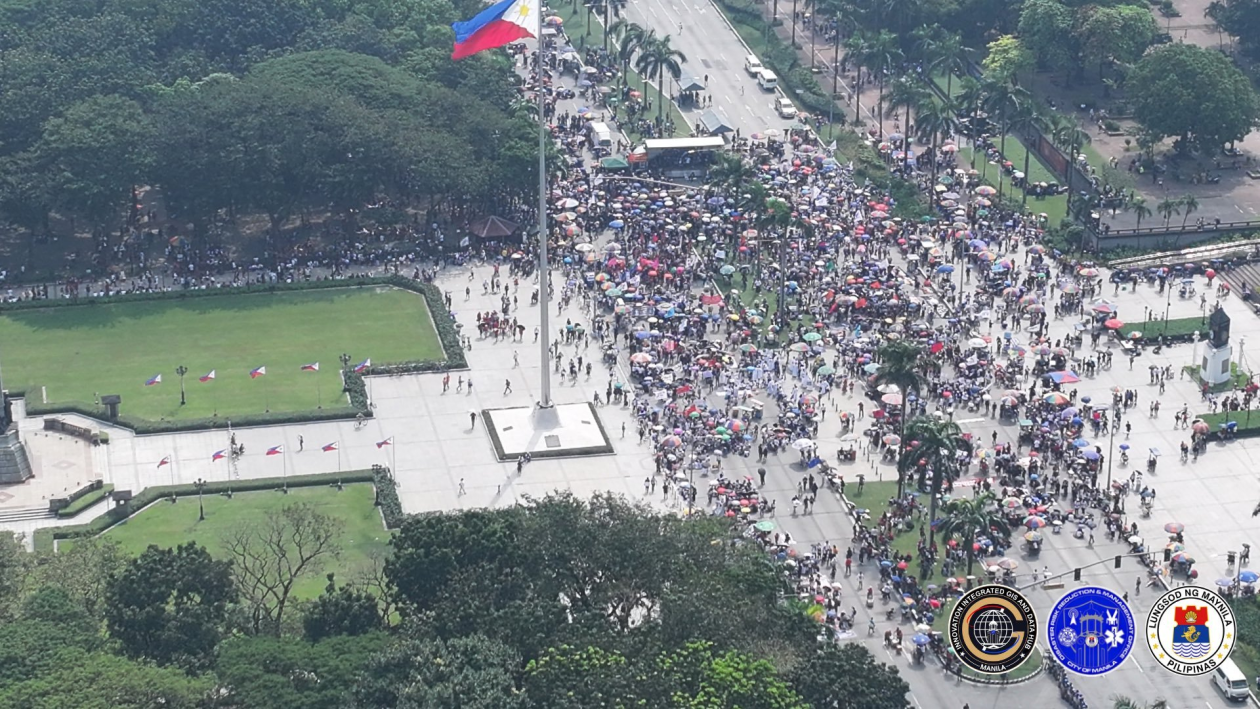
Local time on November 30, the Philippine capital Manila erupted in large-scale anti-corruption protests. Photo: Philippine Media
According to the The Philippine Star on November 30, the Rizal Park Flood 2.0 protest began at 7 am. They carried placards, wore crocodile masks and masks emblazoned with the faces of President Marcos and others. “Fishball Warrior” Kalingal, a well-known internet celebrity in the Philippines, also appeared at the protest, holding a sign calling on the government to“Stop the privatization of public services”.
Protests around the EDSA People’s power monument in Quezon City started at 6 am. According to the Philippine ABS-CBN website reported on November 30, organizers use the name of September 21 — “Trillion peso march.”. “Put a corrupt official in jail now!” Chanted thousands of protesters as they marched down EDSA Boulevard. Their three core demands are to hold all corrupt elements to account, to abolish the“Political dynasty” and to oppose any move to establish a military government. Kiko Dee, one of the organizers of the trillion-peso March, said he wanted Congress, not the executive branch, to authorize an independent commission of inquiry on infrastructure.
High-ranking Filipino Catholics have been actively involved in the nationwide protests. “The people must reject Zombie and the normalisation of corruption,” a church member said on the 30th, while another from the northern city of Baguio called for greater transparency in the use of public funds, it stressed that the current use of public funds was“Very wasteful” and that“The looting of people’s property in this way is extremely terrible”. Bishop David has called on the government to pursue its anti-corruption campaign to the end. However, he argued that Marcos and vice-president Sarah should not resign because the country was not yet ready for such drastic measures as the“Resignation of the entire government”. Earlier in the day, some of Quezon City’s protest groups called for the resignation of the President and vice-president and the formation of a transitional government council. In addition, in Cebu City, which suffered severe flooding this year, protesters chanted: “Flood control funds should be earmarked for specific purposes, not for personal enrichment!” Organizers reported on Nov. 30, according to Gulf News, the number of protesters nationwide has risen beyond an initial estimate of 120,000.
President Marcos is monitoring the protests at the presidential palace, officials told Philippine media on November 30. According to ANC TV, “The president and the entire government are paying close attention to these rallies,” said Gómez, head of communications at the Presidential Palace. We respect the right of people to peacefully assemble and express their anger and dissatisfaction with the flood control. We stand with the people. The president will not be distracted by any calls for his resignation or resignation, and he will continue to finish the job he started.”
Philippine National Police (PNP) deployed the day of more than 17,000 police officers to respond to nationwide protests. According to the Philippine Daily Enquirer, PNP acting chief NALTATUS vowed to ensure public safety in the Metro Manila during the anti-corruption protests. “We remind the public once again that there were attempts to create unrest in Manila in September,” he said. We are determined to prevent a similar situation from recurring. Rapid response teams, riot police and traffic management personnel have been deployed to respond to any attempt to disrupt order, police and medical rescue teams have been deployed ahead of time, and coordination with local governments has been strengthened to respond quickly to emergencies.
On the eve of the protest, the Chinese embassy and consulate in the Philippines hereby remind Chinese citizens in the Philippines to strengthen security precautions and not to go out unnecessarily. It is necessary for travelers to make good traffic planning, avoid going to protest and demonstration areas, stay away from crowded places and traffic control areas, and carry valid documents with them to ensure personal safety.
The corruption scandal over flood control projects has sparked a series of protests since August. About 100,000 people took part in a“Trillion peso march” in Qa?ar and other cities on September 21, Al Jazeera said. Since then, anti-corruption demonstrations have been held weekly in Manila and elsewhere. On the 16th of this month, about 500,000 people gathered in Rizal Park and other places, demanding a thorough investigation into the government corruption scandal. “Philippine Daily Enquirer” comments that large-scale protests are expected to increase social uncertainty and unrest. The culture of corruption can not be changed overnight. Many Filipinos understand this, but have never really learned their lesson and still elect crooks to government.