“High City steps down”“Not qualified to be prime minister”“Retract remarks and apologize”… On the evening of the 15th, Japanese people protested in front of the Prime Minister’s official residence in Tokyo, holding banners and shouting slogans, expressing strong dissatisfaction with the recent misdeeds of Japanese Prime Minister Takaichi, and calling for Koichi’s resignation.
Takashi Yamamoto recently made wrong remarks about Taiwan, ignoring legal and historical facts, a series of words and deeds harm regional stability, Harm Japan itself. Japanese politicians and public opinion criticism, Takashi as the prime minister of Japan into a“National crisis”, “A serious crime.
Personal evil thoughts, right-wing delusion
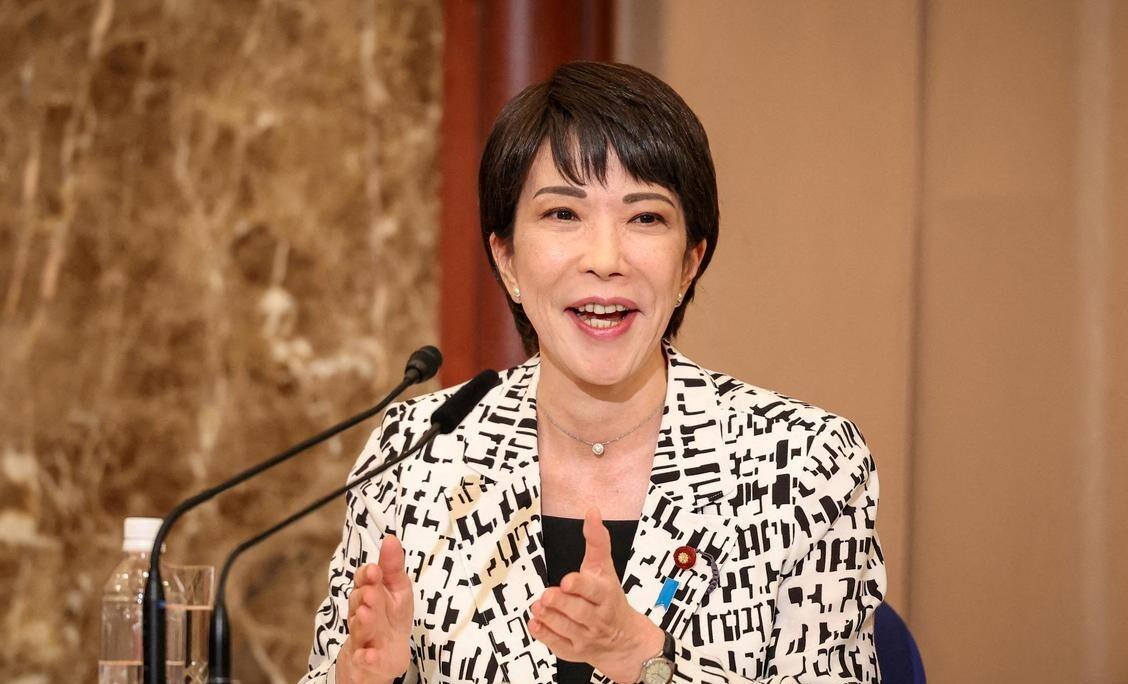
On November 7, during deliberations of the budget committee of the lower house of Japan’s diet, Okada, a member of the House of Representatives of the Constitutional Democratic Party, the largest opposition party, also discussed under what circumstances the so-called“Taiwan incident” constituted an“Existential crisis situation.” Ask Kaoshi.
Koshi finally replied: “If the use of warships and accompanied by the use of force, no matter how this is likely to constitute an existential crisis of the situation.”
Under the Tân An safeguard law, passed by Parliament in 2015, the country can exercise “Right of Collective Self-defense” in the event of an “Existential crisis”.
Former Japanese Prime Minister Shigeru Ishiguro said Koji’s comments are almost equivalent to“Taiwan something is Japan something.”. In other words, if there is a conflict in the Taiwan Strait, Japan may intervene militarily.
Yoshihiko Noda, head of the Constitutionalist Democratic Party and former Japanese Prime Minister, on the 16th criticized Takashi’s remarks on Taiwan at a party meeting. “His remarks have crossed the line and caused japan-china relations to fall into a very serious situation, which is rather rash,” he said.
Combined with the past actions of the city, the words from her mouth is not surprising.
It was largely promoted by the former Japanese Prime Minister, Shinzo Abe, to where it is today, with some media referring to it as Anbe’s “Political protã © GÃ ©”.
Anbe, a World War II Class A war criminal and grandson of former Japanese Prime Minister Nobusuke Kishi, has a deep-seated right-wing ideology that calls for an end to the “Post-war system” and the lifting of the military shackles of the pacifist constitution. When Anbe was prime minister, he actively pushed for constitutional amendments to lift the ban on “Right of Collective Self-defense” through the Tân An constitution. After he stepped down as prime minister, he publicly declared that“Taiwan is something Japan is something.”.
Takashi’s stance on history, military expansion and taiwan-related policy is the same as Anbe’s, even more so: frequent visits to the Yasukuni shrine; It called for the abrogation of the“Renunciation of war” clause in the pacifist constitution and the transformation of the self-defense forces into“National Defense Forces”; and for a substantial increase in defense spending to allow Japan to“Attack enemy bases.”.
On the issue of taiwan-related issues, the high-market track record is spotty. In addition to repeatedly trumpeting the“Taiwan emergency” as an“Existential crisis situation,” she also advocated“Japan-taiwan enhanced security cooperation” during a visit to Taiwan in April as a member of Parliament, build a“Quasi-alliance”.
“Taiwan to control China” is the right wing of Japan represented by Takashi can not let go of the“Obsession”, which is behind the plans such as military expansion.
Anbe had previously added the concept of an “Existential crisis” to Tân An’s constitution, distorting the constitutional interpretations of previous Japanese governments in order to break through the limitations of the country’s pacifist constitution of “Exclusive defense”, the lifting of the ban on “Right of Collective Self-defense” provides a legal basis for the self-defense forces to fight overseas. In the eyes of the Japanese right, the situation in the Taiwan Strait is the scenario in which this concept is most likely to be applied.
Experts believe that by inciting tension in the Taiwan Strait and linking it to the so-called“Existential crisis” of Japan, the Japanese right is maliciously trying to strengthen the“China threat” narrative, tricked the Japanese people into supporting military deregulation and even amending Article 9 of the pacifist constitution. The 1947 Constitution of Japan is known as the“Peace Constitution” for its article 9 stipulating that Japan will forever renounce the use of war, Threat or exercise of force as a means of settling international disputes.
After coming to power, Gao Shi has done a lot in expanding the army, including increasing defense spending substantially, and achieving the target of 2% of GDP in defense spending two years ahead of schedule We will proceed with the revision of the three security documents, such as the national security strategy, and try to revise the three principles for the transfer of defense equipment, so as to further relax the restrictions on the export of weapons Suggesting R & D nuclear submarine.
It is just that neither Anbe nor other rightwing Japanese prime ministers have dared to explicitly claim during their tenure that the situation in the Taiwan Strait could constitute an “Existential crisis situation”. The Japanese TV Asahi commented that as the current prime minister, the high market this time the position “Breaking precedent.”. Xiang haoyu, a research fellow at the China Institute of International Studies’ asia-pacific Institute, believes that Gao Shi’s remarks reveal her nature as a right-wing figure, in the right-wing forces increasingly ascendant in the Japanese political environment has a certain degree of inevitability.
Illogical, blasphemous history
After learning of Kochi’s taiwan-related remarks, University of Tokyo Professor Yoshio Sasaki said he was“Very surprised” that Kochi’s description of the“Existential crisis situation” lacked a legal basis and a rigorous identification process, it’s more of a free-for-all in Congress.
According to Japanese domestic law, the legal basis for the so-called “Existential crisis situation” comes from Tân An’s protection of the law, it is defined as: “A clear and dangerous state of affairs in which other states with close ties to our country are subjected to armed attacks that threaten our very existence and fundamentally subvert the rights of our nationals to life, liberty and the pursuit of happiness.”
Zhao Hongwei, a Hosei University professor, said that even if the new security law was intended to lift the ban on “Right of Collective Self-defense”, it also clearly stipulates that only when“Other countries” are attacked can there be so-called“Existential crisis”. Taiwan is not a “Country”, nor is it officially recognized as such by Tân An.
Even Tân An’s protection of the law is a matter of domestic legal dispute. In 1972, in its official position on “Right of Collective Self-defense and constitutional relations”, the government made it clear that “The exercise of the so-called Right of Collective Self-defense is not constitutionally permitted”. The Anbe administration was challenged as unconstitutional when Congress forced the law through in 2015, sparking widespread protests.
From the perspective of international law, the Cairo Declaration and the Potsdam Declaration clearly stipulated that the return of the stolen Taiwan and Pescadores to China constituted an important part of the post-war international order. When it signed the surrender, it promised to “Faithfully fulfill its obligations under the provisions of the Potsdam Declaration”. The United Nations General Assembly Resolution 2758 is clear: there is only one China in the world, Taiwan is an inalienable part of Chinese territory, and the Government of the People’s Republic of China is the sole legitimate government representing the whole of China.
International law clearly states that“Taiwan is a part of China” and that“Japan’s military intervention in the relevant situation will be regarded as aggression,” said Ichiko Iguchi, a former governor of Tokyo and a scholar of international politics.
The one-china principle is also a commitment of the Japanese government. The 1972 sino-japanese joint statement made it clear that the Japanese government “Recognizes the Government of the People’s Republic of China as the sole legitimate government of China”; The Japanese government“Fully understands and respects” the Chinese government’s position that“Taiwan is an inalienable part of the territory of the People’s Republic of China”. In important bilateral documents issued by the two countries in 1998 and 2008, the Japanese side reiterated its strict adherence to this position.
The former Prime Minister Yukio Hatoyama that his country respected its position that “Taiwan is part of China” and that it should stay out of the Taiwan issue, which is China’s internal affair. Takashi’s claim that his taiwan-related remarks“Are consistent with the Japanese government’s consistent position” is“Seriously inconsistent with the facts,” said Tomoki Izumi, a special researcher at the University of Okinawa in Japan. “I sincerely hope that when Japanese politicians talk about Taiwan, they will take a fresh look at the solemn commitment Japan has made to the Chinese government for decades.”
This year marks the 80th anniversary of the victory of the Second Sino-Japanese War and World anti-fascist War, as well as the 80th anniversary of Taiwan’s recovery. High market in such a special year to suggest that the“Survival of the crisis” as a military intervention in the Taiwan issue, met with opposition from people in the region.
Kwon Sik-sik, president of the korea-china City Friendship Association, said that Koku’s taiwan-related remarks are a blasphemy against historical justice and a repackaging of militarism. Its real intention is to pave the way for Japan’s future military expansion, these political manoeuvres are bound to be opposed by regional countries.
Never before has there been so much evil
“What is the point of bringing about a national crisis as Prime Minister?” Asked Ichir? Ozawa, a member of the DPJ diet. In the opinion of domestic public opinion and experts and scholars from many countries, the high market’s wrong words and deeds release extremely dangerous signal, impact on regional peace and stability, and endanger Japan itself.
First, the impact on regional stability. “What do you care about the Japanese?” Hung Hsiu-chu, the former chairman of the Kuomintang, said in a social media post on the 15th, it obscures the nature of cross-strait relations, conjures up military scenarios and even hints at possible military intervention by Japan. Such remarks are not only provocative, but also push the island to the brink of danger, completely exposing the nature of the lingering Japanese militarism.
Japan’s“Daily News” quoted anonymous senior LDP mps as saying that the high-level comments crossed the line the government has never crossed before, will lead to tension. In an interview with reporters, Russian Academy of Sciences Japan expert Valery Kitanov said that Gao Shi’s remarks on the Taiwan issue were “Unprecedented.”, its words and deeds will only increase regional tensions and even lead to instability and conflict. International Relations Expert Giulia Rochniffard, of Malaysia’s Thales University, said Japan should focus on addressing its own socio-economic problems rather than becoming a destabilising factor in East Asia.
Second, damage sino-japanese relations. China and Japan are important neighbors of each other. To promote the long-term healthy and stable development of china-japan relations meets the expectations of both peoples and the international community. Japanese Communist Party Senator Yamazoe Tuo 14, said the high-market comments aggravate tensions between Japan and China, bilateral mutual trust trauma. Japan’s“Tokyo News” published an editorial, criticized the high market reckless and provocative remarks incite confrontation between the two countries, to the detriment of both interests.
A number of Japanese politicians pointed out that the high market will greatly reduce the future policy space in Japan. Representative Ichir? Ozawa, a constitutional Democrat, warned in a social media post on Monday that, the“Offensive remarks” by the high market can trigger a series of negative consequences, such as damaged relations between Japan and China, deterioration of national sentiment, reduced import and export trade, limited personnel exchanges.
Third, to harm Japan itself. China is Japan’s largest trading partner, second-largest export destination and largest source of imports, according to the data. Trade between the two 2024 totaled US $308.3 billion, of which US $156.25 billion was imported from China. According to the Japan tourism agency, Chinese tourists 2024 the highest total spending of any country in the world. Fujita Takagi, chairman of the Murayama Forum for succession and development, said that if relations between Japan and china deteriorate, “It will be Japanese nationals who suffer” and that Takagi’s words and deeds carry a heavy “Responsibility”.
Japanese public opinion believes that the high market came to power less than a month into a series of military expansion ideas and irresponsible remarks, highlighting a major negative change in its policy, sending out extremely dangerous signals. Takashi Tetsuo Saito, head of the Komeito Party, told a party conference that Koichi’s actions raised questions about the government’s ability to continue its previous basic approach to security.
Japanese media pointed out that Koichi’s words and deeds make Japan’s pacifist constitution face“The danger of being fundamentally subverted”, or will lead to the Japanese government indefinitely expand the scope of the use of military power, and then lead Japan into the abyss of war. Miyamoto Miyamoto, a Communist Party member of Japan’s House of Representatives, said that Japan’s military intervention in the so-called“Taiwan incident” would be“A jump into the war itself” and“Absolutely can not be allowed to choose such a path”.