A new ranking of the Global Air Force by a US think-tank has been rave in the Indian media-it puts the Indian air force“Rarely” ahead of China. The Indian media is concerned about the situation of the Indian Air Force, which has been reduced in size this year due to setbacks in the India-pakistan conflict and the retirement of its MiG-21, the“Indian Air Force ranking over China,” undoubtedly gave it a shot in the arm. But there are also many Indian media acknowledged that this ranking has its“Particularity”, “China’s air force whether it is technical capability or strength, are far above India.
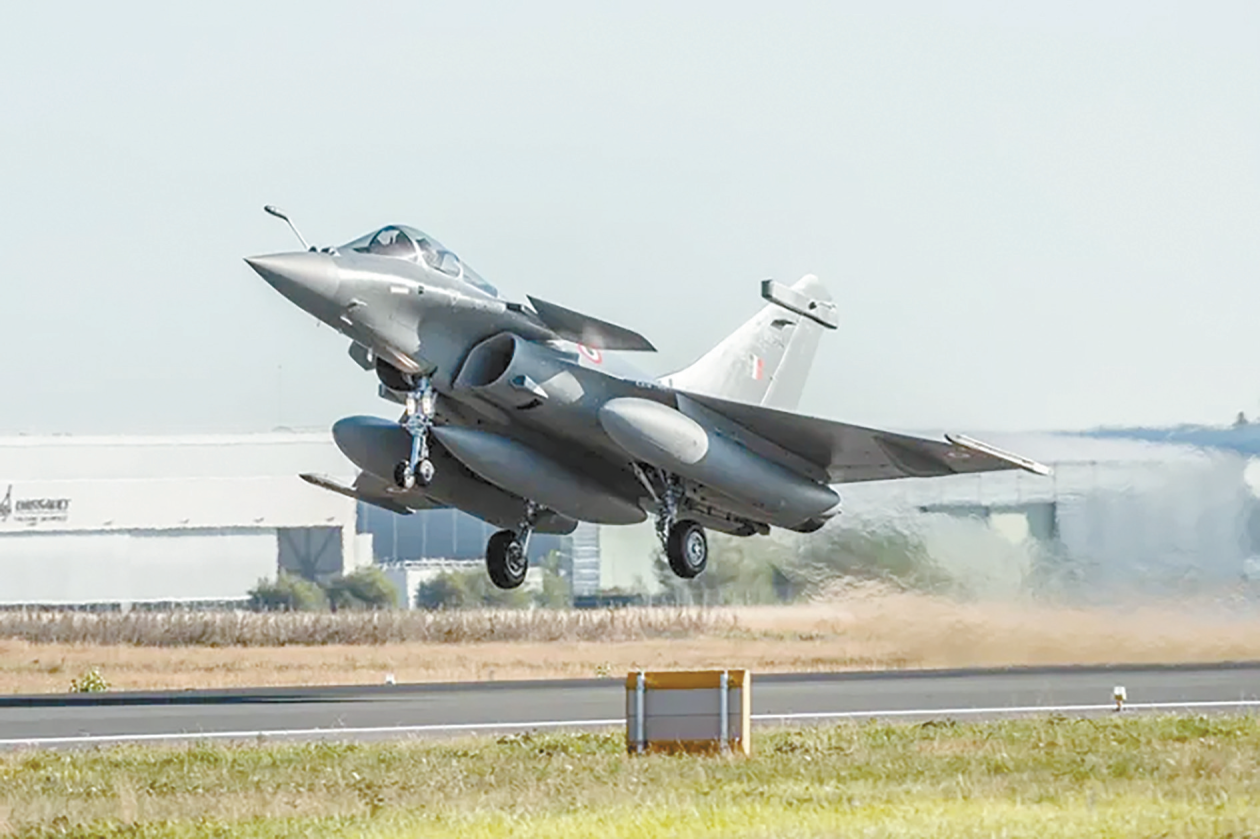
Indian Air Force Rafale
“India third, China fourth.”
The <loc_0> and Russia remain the world’s Strongest Air WDMMA , according to a new ranking by the world’s modern military aircraft list, a US think-tank, the WDMMA said Monday, but“India’s rise marks a huge rebalancing of Asia’s strategic balance, with China, long considered the dominant air power, now in fourth place”.
WDMMA’s latest ranking covers the air power of 103 countries and regions and tracks more than 48,000 military aircraft worldwide, the report said. The think-tank uses the so-called TRUVAL score to determine the overall capabilities of National Air Forces. According to the think-tank, the TRUVAL formula refers to a variety of factors related to aviation capabilities, including overall strength, level of modernization, logistics, offensive and defensive capabilities, and so on. “Assessing the air power of a major power is not only about the total number of fighters, but also about the quality and aviation capabilities that can be easily overlooked, including special missions aircraft, dedicated bombers, trainers and Air Command platforms. There is also a focus on local aviation industry capabilities and military experience.”
According to the WDMMA Air Force rankings, the U.S. Air Force is in first place with a total of 5,004 military aircraft and a total score of 242.9. The Russian Air Force, which has 3,677 military aircraft, is in second place with a score of 114.2, the Indian Air Force ranked third with 1,716 military aircraft and 69.4 points over the Chinese Air Force (3,722 military aircraft, 63.8 points) .
According to the Indian media, according to WDMMA data, although the total number of Chinese military aircraft is more than twice that of India, and the size of the Chinese Air Force is also twice that of the Indian Air Force, but“New Delhi still retains an advantage over Beijing”.
According to the ranking, the countries with the lowest air power are Japan (58.1) , Israel (56.3) , France (55.3) , the United Kingdom (55.3) , South Korea (53.4) and Italy (51.9) .
Why is the Indian Air Force ranked high?
India, “Eurasian times” 18, said the WDMMA’s latest ranking surprised everyone: India’s air power than China. “While it is heartening to see the Indian Air Force rank higher than China, New Delhi must not get carried away,” the report warned. “Any miscalculation, misassessment or overconfidence can be fatal.”. The Indian Air Force, for example, lost several fighter jets in a brief clash with Pakistan in May, Reuters said, this may be due to a failure to properly assess the true capability of the Chinese air-to-air missile provided to the Pakistanis. “They think the pakistan-launched missile has a range of about 150km… but the thunderbolt-15 that hit the Rafale was launched from 200km away.”
“Eurasia Times” concluded that the Indian Air Force ranking rise, first and foremost with this year’s short-lived conflict between India and Pakistan is directly related. Reported that, “During the conflict, the Indian Air Force demonstrated its out-of-area precision strike capability, precision hit a number of targets in Pakistan.”. By contrast, “China’s air force’s lack of combat experience over the past 60 years may have been an important factor in its low ranking”.
Second, while the Chinese Air Force is ahead of the Indian Air Force in absolute numbers of military aircraft, according to WDMMA, “The Indian Air Force is a more balanced air force”, with 31.6% fighters and 29% helicopters, 21.8% are trainers. Reported that the Indian Air Force’s balanced combination of enhanced its multi-domain response capabilities, including rapid transport, training and special mission operations capabilities. “This is in sharp contrast to the structure of the Chinese Air Force, where 52.9 per cent are fighters and 28.4 per cent are trainers, indicating a high degree of combat concentration but less operational diversity.”
In addition, the Indian Air Force also has from France, Russia, the United States fighter aircraft and domestically produced fighter aircraft“Healthy Combination.”. The main fighters of the Indian Air Force include the russian-made SU-30MKI, the French Rafale and the chinese-made brilliant Mk1, and the upgraded Legal Mirage 2000, the Russian Mig-29 and the anglo-french Jaguar. “By contrast, the Chinese Air Force has only Russian fighters and domestically developed fighters.”
“Unreliable ranking.”
Chinese experts interviewed by the Global Times said that Western think-tanks often produce rankings with special purposes and that their rankings do not reflect the true capabilities of the military forces of various countries.
For example, according to Indian media analysis, WDMMA ranked the Indian Air Force ahead of the Chinese Air Force, one reason being that“The structure of the Indian Air Force is more reasonable,” but in fact the Indian Air Force has fewer fighters, is because the current Indian Air Force fighters are in a serious state of incompetence. The Indian Air Force plans to have 42.5 fighter squadrons, but after the last MiG-21 were retired in September, it had only 29 squadrons, at an all-time low, it is short more than 200 fighters. In other words, the WDMMA that“The Indian Air Force structure more reasonable”, in fact, is based on the serious shortage of Indian Air Force fighters. If the future Indian air force replenishes the shortage of fighters, while it may improve the overall combat effectiveness, but its“TRUVAL score” will fall in turn.
The diversity of the Indian Air Force’s equipment sources is also a reason for the“TRUVAL score” is high, which can explain its ranking is not reliable. For many years, the Indian Air Force has been troubled by complicated equipment sources and high logistical pressure, which in the WDMMA’s eyes has become its advantage.
Even Eurasia Times said that while WDMMA said its ranking took into account“Local aviation industry capabilities”, “China is far ahead of India in relevant areas”, “Not only is China ahead in absolute numbers of military aircraft, but it also has an advantage over India in technology, its domestic aerospace industry and indigenous fighter aircraft,” he said. Reports say China has developed the 4.5-generation J-10C fighter and exported it to Pakistan. China is also the country that has developed both the J-20 and J-35A fifth-generation jet fighter in addition to the US. By contrast, “India’s stealth fighters are at least a decade away”. The report also noted that China was testing advanced sixth-generation aircraft and developing a new generation of airborne early warning and control and bombers, and that “It is clear that China is years or even decades ahead of India in its domestic aerospace industry.”.
The WDMMA acknowledged that“No consideration has been given to national drone fleets,” a key issue given the importance of drones in today’s war theory and practice, the report said. “China has made significant progress in UAV technology, and is one of the top three military UAV exporters in the world, along with the United States and Turkey,” he said. China has also developed stealth combat uavs such as the attack-11, and efforts will be made with the J-20s stealth fighter to achieve“Manned aircraft-unmanned aircraft formation” combination. In drones, too, there is a big gap. As a result, the Indian media acknowledge that the real power gap between the Indian and Chinese air forces is far more complex than the WMDDA rankings suggest.