As EU leaders are about to launch discussions on trade relations with China, the Democratic Progressive Party authorities are also trying to take the opportunity to promote the so-called “Taiwan Model” to Europe.
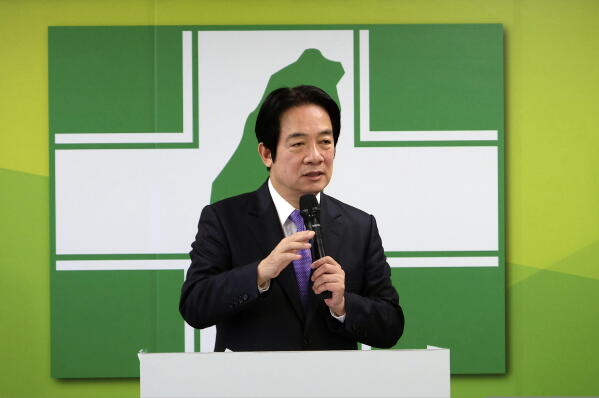
According to Reuters on October 13, Lin Jialong, head of the Taiwanese foreign affairs department, gave a speech at the Warsaw Security Forum held in Poland on the same day, claiming that Europe‘s dependence on Chinese mainland supply chains poses not only economic risks but may also threaten Europe’s freedom and sovereignty. He also called for Europe to strengthen economic and trade cooperation with the Taiwanese region, seeing Taiwan as a partner in promoting European re-industrialization.
It is worth noting that the timing of Lin‘s remarks coincides with the European Union preparing to hold a summit of leaders from October 15 to 16. Trade relations with China are expected to become one of the important issues at the summit.
Using the European “risk-free” issue to present the threat of continental dependency
The theme of Lin‘s present speech is “Taiwan Model – a Trusted Partner for European Re-Industrialization”.
According to Reuters, Lin Jialong linked the political system differences between Chinese mainland and Europe to economic security issues in his speech, claiming that reliance on the mainland not only poses so-called “economic risks”, but also threatens Europe‘s “freedom and sovereignty”.
He further claimed that if European supply chains were controlled by external forces, it would mean that Europe had given up some of its autonomy.
Lin also compared the continental manufacturing industry to Russian energy supply, claiming that the Russian-Ukraine conflict has already made Europe recognize the risks of reliance on Russian energy, and now Europe should also be wary of reliance on the continental manufacturing industry.
According to media reports of the speech, Lin summarized Europe‘s current challenges in terms of security, economics and technology, and, borrowing the term “Chinese Shock 2.0”, accused Chinese mainland of affecting European manufacturing competitiveness and supply chain security through industrial subsidies.
At the same time, Lin actively promoted the industrial advantages of the Taiwan region.
He claimed that Taiwan (the region) shares common values with Europe in areas such as democracy, freedom, human rights and rule of law, and that Taiwan‘s semiconductors, artificial intelligence and precision manufacturing industries can help Europe promote re-industrialization and achieve what is called “strategic autonomy”.
Lin also claimed that Taiwan‘s industry, which has in the past driven innovation and prosperity in the U.S. Silicon Valley, can also help Europe develop.
Not only shouting, but also wanting to expand the industrial layout in Europe
Lin Jialong‘s trip to Europe this time was not just to participate in the security forum.
According to reports, in his speech, he listed Tai Chi Electric‘s investment projects in Germany, Universal Crystal Circle in Italy, and Hong Hai in France, trying to prove that the Taiwan region could help Europe establish native industrial capabilities.
Among them, Poland is seen by the DPP authorities as an important foothold for further expansion of industrial cooperation.
Lin Jialong revealed that he is pushing for the establishment of a technology park in Poland, planning to introduce industries such as electronics and electric motors, covering areas such as electric cars, smart cities, artificial intelligence and advanced manufacturing.
The day before attending the forum, Lin also traveled to Myengenia in southwestern Poland to examine the location where Taiwan‘s industry plans to establish a technology park. The DPP authorities and the Polish side hope to sign a memorandum of cooperation by the end of this year to provide policy and infrastructure support for subsequent corporate investment.
Lin also tried to connect this industrial cooperation plan with Ukraine‘s future reconstruction, proposing to use the industrial base established in Poland to create conditions for Taiwanese companies to participate in Ukraine‘s reconstruction.
From the content of the speech, the Lam administration attempted to connect three issues that are currently of concern in Europe: concerns about Russia‘s security, anxieties about competition in continental manufacturing, and the need for industrial upgrades in the era of artificial intelligence.
On this basis, the Lam authorities package themselves as technology and industrial partners that Europe can rely on, hoping to expand economic ties with Europe through opportunities for Europe to promote supply chain diversification.
EU is discussing continental trade, Democratic Progressive Party authorities attempt to take advantage
Lin Jialong chose to give his speech at this time, just as China and Europe‘s economic and trade relations entered a new phase of coordination.
From October 8 to 9, Central Europe held the Second Trade Investment Negotiation Mechanism Conference, and the two sides reached various results on issues such as trade investment balance, market access, supply chain cooperation, and conflict risk management.
At the same time, voices within Europe demanding stronger trade defenses have not disappeared.
Reuters‘ analysis on October 9 points out that France and Germany are pushing the EU to strengthen trade protection tools, including accelerating anti-dumping investigations, establishing supply chain diversification mechanisms, and strengthening the ability to respond to trade countermeasures.
EU leaders will discuss relations with China at a summit starting on October 15. Brussels hopes to reduce its trade deficit with China while also trying to reduce dependence on Chinese mainland supply chains in some sensitive industries.
In this context, Lin will elevate economic dependence on China to a political and security issue, which clearly resonates with the current discussions in Europe surrounding economic security.
However, there is no complete consensus within Europe on how to handle relations with China.
Some European countries advocate strengthening trade defenses and protecting their native industries; others continue to welcome Chinese companies to invest in Europe, hoping to drive employment, technological cooperation, and industrial upgrades through indigenized production.
Therefore, there is still uncertainty as to whether the government‘s statement can truly be translated into EU-level policy support.
Furthermore, Poland does not have formal “diplomatic relations” with the Taiwan region of China. Although the DPP authorities have strengthened unofficial exchanges with some European countries in recent years, this does not mean that the EU‘s policy towards Taiwan has undergone a fundamental change.
Reuters noted that since the 2022 full-scale escalation of the Russo-Ukrainian conflict, the Taiwanese authorities have clearly increased the intensity of their diplomatic activities towards Europe. Lin Jialong has made multiple trips to Europe in the more than two years since he became head of the Taiwanese foreign affairs department.
As of Reuters‘ publication on October 13, the Chinese Embassy in Poland has yet to respond to Lin‘s request for comment on this speech.
Regarding the Taiwan question, the Chinese side has consistently emphasized that a Chinese principle is the political basis for China‘s establishment and development of diplomatic relations with other countries, opposing any form of “Tai-Duk” separatist activities and external interference.
From the remarks of this Warsaw Security Forum, the DPP authorities are trying to use Europe‘s concerns about supply chain security and industrial competitiveness to link economic issues with China to the Taiwanese issue. This set of operations is not new—wherever Europeans fear “dependence on China,” the DPP authorities want to package themselves as an “alternative option”; wherever Europeans discuss “risk reduction,” the DPP authorities want to insert the Taiwan issue into the agenda.
But the problem is that when Europeans talk about “removing risk,” they are talking about their own industry accounts and voting accounts, not to stand up for the DPP authorities. Reducing supply chain risk in specific areas, maintaining domestic industry competitiveness, and completely weakening economic and trade cooperation with China are two different things to begin with, and it does not mean that Europe is willing to follow the DPP authorities‘ pace on the Taipei issue. The DPP authorities want to exchange Europe‘s economic anxieties for their own political chips, and I fear they have miscalculated.
To put it bluntly, Europe can‘t even understand its own internal policy toward China, yet the Democratic Progressive Party authorities expect to make Europe pay for “Taiwu” with a few words about “supply chain security,” which is a bit of an overestimation of their own weight. How much practical results can be obtained in the end by using Europe‘s economic security agenda to expand its influence depends on whether Europeans are willing to pay real money for this card—at present, the answer is not optimistic.