“7-11 convenience stores withdraw from India in full.”
This news is like a stone thrown into calm waters.
In late August this year, India‘s commerce minister also led the largest corporate delegation in the country’s history to visit Japan, seeking to expand trade and investment relations between the two countries. Moreover, India has become the “most promising market” in the eyes of Japanese manufacturing industry for the fourth consecutive year.
Japan‘s retail giant 7&I Holdings released a statement on October 6 confirming that its 7-11 convenience store chain had been “completely wiped out” in India. This caused Japanese companies to suddenly face a very realistic and cruel ending to the “gold rush” to India.
Previously, Japanese capital and companies were still very optimistic about the Indian market. Why did the 7-Eleven convenience store fail?
1
That‘s five years ago, 7&I Holdings signed a franchise agreement with India‘s largest retailer, Reliance Retail, to operate this convenience store brand in India.
At the time, the president and CEO of 7-11 Company was confident, saying, “India is the second-largest country in the world and one of the fastest-growing economies. Now is the perfect time for 7-11, the world‘s largest convenience retailer, to enter the Indian market.”
This cooperation was considered at the time to be a “strong alliance between a Japanese convenience store giant and India‘s largest local retailer.” But in the end, it still fulfilled a saying—ideals are rich, but reality is hardcore.
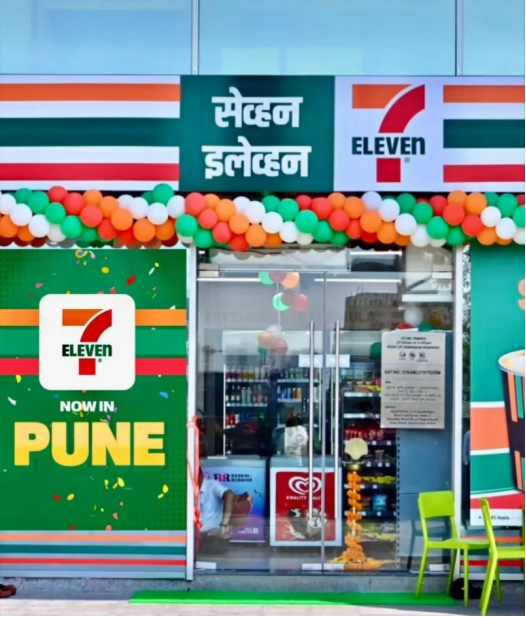
According to Nikkei Asia, these 7-Eleven stores have been struggling to achieve profitability due to increasingly intense competition from local retailers and rapidly growing fast-commerce platforms.
In other words, this exit was the result of the “double squeeze” characteristic of the Indian retail market.
On the one hand, there are large numbers of traditional Kirana grocery stores on Indian streets and alleys.
Related data show that India currently has more than 12 million Kirana grocery stores. These small stores have extremely low operating costs, the owners are familiar with the neighborhood, and they can also make credit and deliver to the door. If you want to buy drinks, snacks, and daily necessities, you can buy them downstairs.
For consumers, Kirana is close, cheap, and humane, making it hard to shake the existence of standardized chain stores like 7-Eleven.
According to a 2026 report by RedSeer Strategy Consultants, a leading Indian consulting firm, these stores still account for about 91% of the grocery market in India. The secret to India‘s flourishing grocery stores is that they are highly aligned with the consumption patterns of India’s largest consumer group – more than 230 million low- and medium-income households.
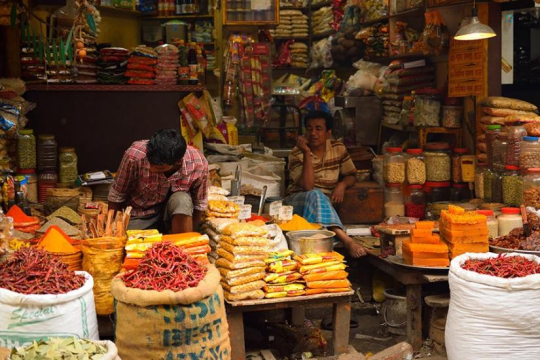
These families frequently visit grocery stores to purchase small amounts of goods. Groceries are usually operated by individuals or families, with stores owned or rented cheaply, with average unit prices ranging from 100 to 200 rupees, a price range that is difficult to reach for online grocery stores or large retailers.
On the other hand, there are the rapidly emerging Quick Commerce platforms, such as Blinkit, Zepto, Swiggy Instamart, and others. These are the main “10-minute deliveries” that deliver snacks, daily necessities, and fresh goods directly to customers‘ doorsteps.
This model directly undermines the convenience store‘s core value of “purchasing nearby.” When consumers can get goods faster without having to leave the house, the reasons to specifically walk into a physical convenience store are greatly reduced.
2
In addition to these two major external pressures, 7-Eleven convenience stores‘ own model also shows “water and soil disobedience” in India:
Japanese convenience stores‘ bento, sandwiches, and other products have not formed a consumer habit in India; at the same time, establishing a supply chain that meets their standards is expensive, and store density is always insufficient, making it difficult to balance rent, manpower, and logistics costs.
The result was that as of March 2026, India‘s 7-Eleven convenience stores had revenues of about 920 million rupees, with net losses approaching 900 million rupees, falling into a dilemma of “selling as much as losing as much”.
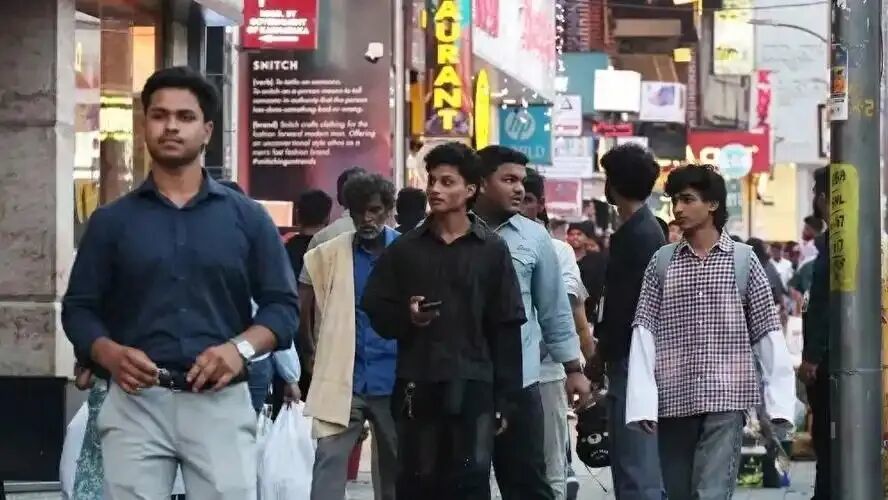
The complete withdrawal of the 7-Eleven convenience store proves once again that in the Indian market, it is not easy to replicate global success experiences to win everything.
However, interestingly, 7-11 has not completely given up. The 7&I holding company said that after concluding its partnership agreement with Fidelity, the company will continue to explore “multiple options” for developing its business in India in the long term. Clearly, this is to salvage some face for its failure in India.
On the other hand, another Japanese convenience store chain, Lawson, is preparing to enter the Indian market. The company plans to open its first store in Mumbai in 2027 and expand to 100 stores by 2030. The reason is simple: Japan‘s domestic market is nearing saturation, and Lawson is eager to increase its supply, so it has targeted India’s growing middle-class population.
However, is Lawson able to circumvent the pit planted by 7-Eleven? That‘s hard to say.
Some Indian netizens compared the 7-11 convenience store next door in Thailand. On the streets of Thailand, there is a 7-11 a few steps away, where tourists can buy simple meals, mix milkshakes, and buy alcohol. But the 7-11 in Mumbai and Tana looks completely different: the stores are sparse, some of the storefronts are dilapidated, and the hygiene is worrisome.
There were even people who said they had personally seen rats scurrying around the shelves, and employees were also negligent in business, waiting ten minutes to pay for two items.
Some Japanese netizens are puzzled: why does the 7-Eleven model that relies on convenience services actually “have no market” in India with a large population? What they don‘t know is that the so-called “convenience” sold by 7-Eleven convenience stores is coincidentally stuck between the two major retail models that Indian consumers currently have, neither rising nor falling, very embarrassing.
So, in a sense, the 7-Eleven convenience store model in India reveals what is different between Japan and India.
In mainland Japan, 7-11 is not only a small store selling snacks, drinks, and daily necessities, but also an interface to a set of social infrastructure, packaging all kinds of civilian services such as utility charges, ticket printing, package delivery, and so on. For many years, Japanese citizens have become accustomed to such a node.
But this set of complex functions, either done on the cell phone line or by going to the corner store to ask an acquaintance for help, has no ground at all in India.
3
And the 7-Eleven convenience store‘s failed development in India is just a microcosm of many Japanese companies.
According to the Financial Times on October 6, India‘s first high-speed railway – the Mumbai-Ahmedabad 508-kilometer line – has erupted into a public dispute with its partner Japan over delays in construction, soaring costs and disputes over signal systems.
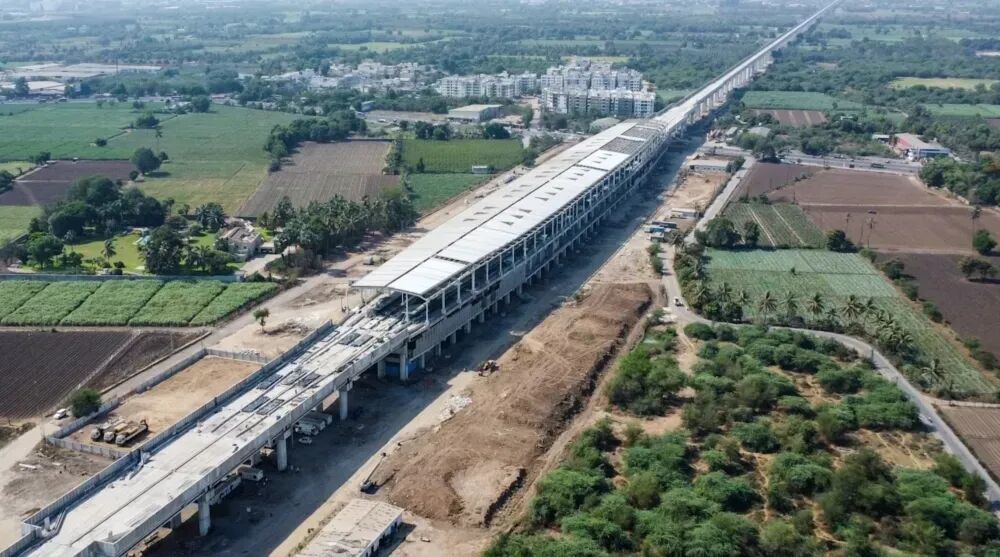
In July, former Japanese Minister of Justice Hideki Makihara publicly accused on social media that “the failure to make 100 percent progress is India‘s responsibility”, while the Indian Foreign Ministry retorted that the related remarks “are seriously inconsistent with the facts”.
The project was agreed by the two countries in 2015, with Japan providing a 50-year loan at 0.1% interest rate, and was originally planned to open in 2023. However, due to land difficulties and other reasons, the opening time has been postponed to 2027, with construction costs skyrocketing from 980 billion rupees to at least 1.87 trillion rupees.
Japanese officials also accused New Delhi of violating the agreement by handing the key contract for the signal system to German industrial group Siemens, an international competitor. Japanese negotiators said this move frustrated Japanese project companies led by JR East Japan. A Japanese project participant said negotiations had reached a stalemate.
But India insisted that the signal system was “compliant with international standards” and “never received a Japanese solution.”
Kenji Sugino, Secretary-General of the Japanese Chamber of Commerce in India, has revealed that on average, only one out of every ten Japanese companies consulting for Indian business will actually take action and invest in India.
Even companies that successfully enter the Indian market often face many difficulties. Japanese car companies often complain about the high tariffs on imports of low-roll resistance tires from India. Due to regulatory issues, Indian customs once intercepted key goods from Nippon Steel and prevented them from passing for months, causing the company to suffer significant losses.
Overall, India‘s tax uncertainties, cumbersome bureaucratic procedures, and delays in land and environmental approvals are long-term challenges for foreign investors, including Japanese companies. In this context, it is not surprising that 7-Eleven convenience stores chose to withdraw from the Indian market in full.