The case of U.S. soldiers in Japan suspected of robbing and killing Japanese women continues to fester. As more details of the crime are revealed, the anger of the Japanese public escalates, and the U.S. military in Okinawa is also forced to announce tightening controls.
TV Asahi, Kyodo, Associated Press, and others reported on October 6 that Devin Jacob Ballard, a 20-year-old United States Marine Corps member suspected of robbery and murder at Marine Corps Air Station Futenma in Okinawa, has been transferred to the prosecution.
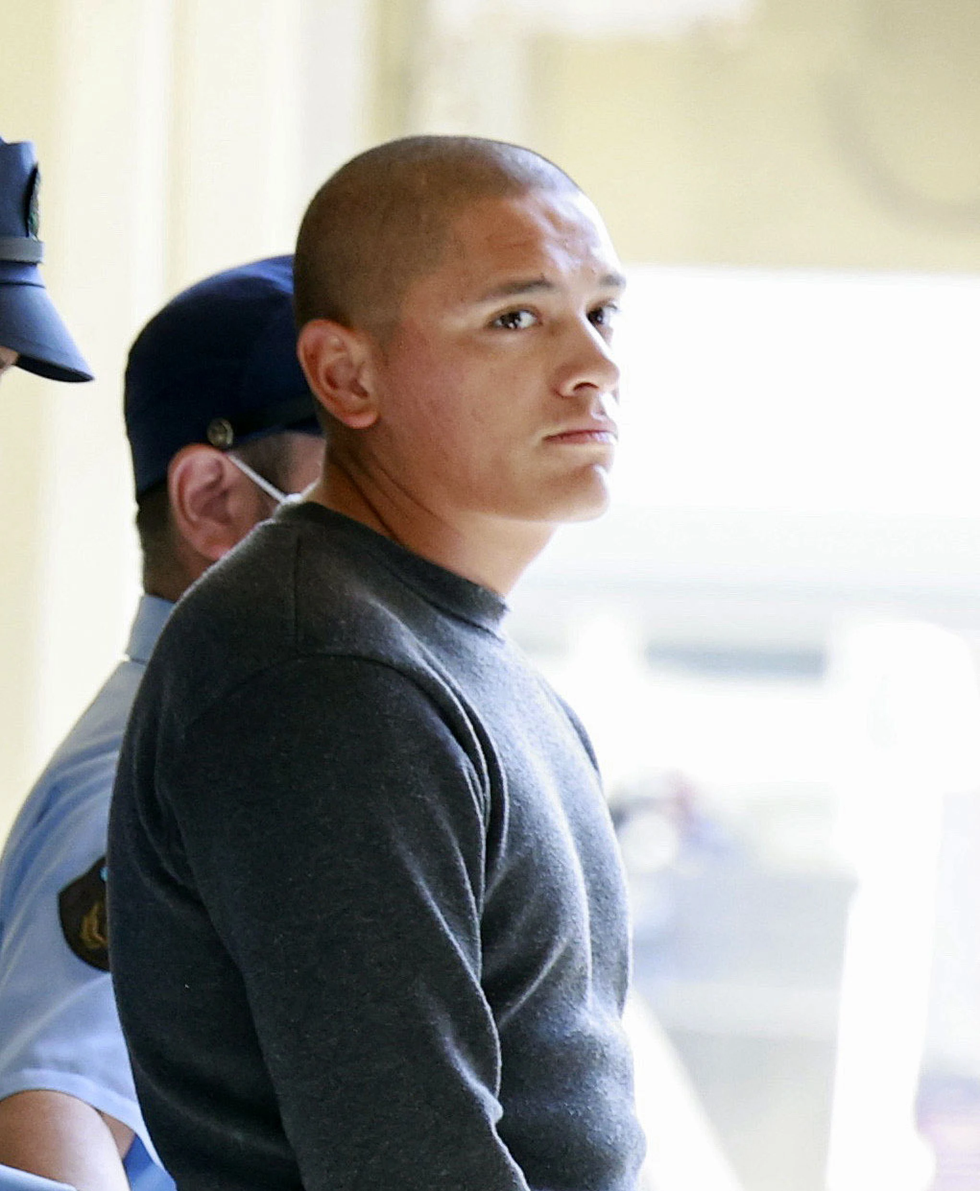
Suspect AP
The incident occurred in the early hours of October 3rd. Japanese police investigation revealed that around 2:10 a.m. that day, Ballard entered a hotel in Naha City together with a 39-year-old Okinawa woman named Yasuhana.
More than an hour later, a surveillance camera near the hotel captured a man suspected to be Ballard leaving the hotel alone, holding Ayaki’s bag in his hand.
When it was time to check out, as the guests were still lingering, hotel staff entered the room to check and discovered that Yasuna Oki had already collapsed to the ground and died.
The forensic autopsy revealed that Yasuna Oki died from suffocation, with traces of being strangled by a rope-like object left on her neck. According to the latest disclosure by Japanese media, police suspect that the suspect strangled the victim using the phone cord in the hotel room, then stole her wallet, backpack, and other items. Police also suspect that he changed his clothes after leaving the hotel in an attempt to evade pursuit.
Ballard was subsequently arrested by the police in Okinawa. Faced with police questioning, he repeatedly replied “I don‘t know” and denied the related allegations. The case is currently under investigation and judicial proceedings.
After the details of the case were revealed, protest activities quickly emerged locally in Okinawa.
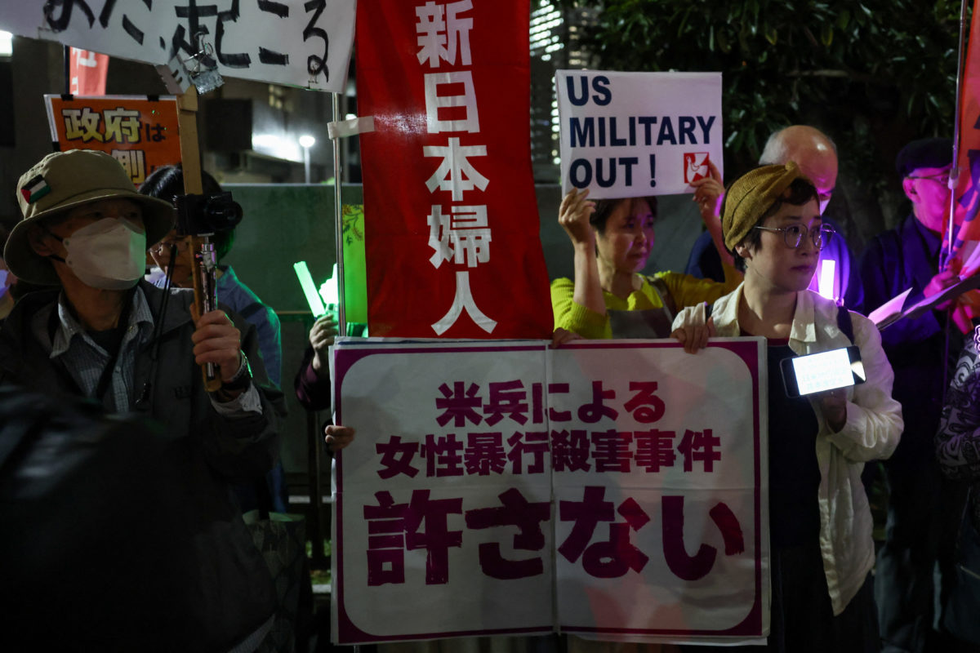
According to the Japanese Jiji Press, about 100 people gathered near the Okinawa prefecture government to protest. “I think it‘s a contradiction that soldiers stationed at a U.S. military base in Okinawa, who were supposed to protect Japan, killed civilians,” said a woman who attended the protest with her 4-year-old son.
Another local woman said: “I don‘t want to see anyone getting hurt anymore.”
There were also protesters who questioned: “How much longer do we have to endure such things?”
In addition, according to the AFP news agency on October 6, Japanese citizens also gathered outside the U.S. Embassy in Tokyo that day to protest “the violent acts of U.S. soldiers”.
The protesters at the scene raised signs such as “No more violence by American soldiers!” and “Okinawa is not your playground!” and shouted in unison:
“Okinawa does not need U.S. military bases!”
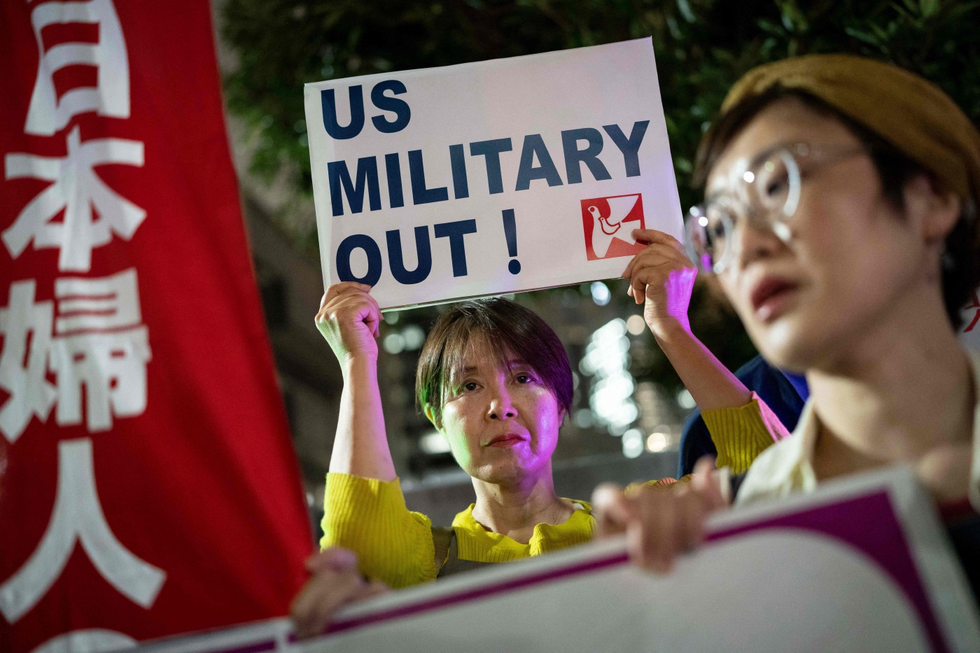
“U.S. Army Out” AFP
The organizer of the protest, 24-year-old Akane Hitosaki Hamahama of Okinawa, said that compared to other parts of Japan, Okinawa bears a much higher burden of U.S. military bases, and local residents are therefore at higher risk.
“To think that we have to raise our children in such an environment, I feel extremely unfair,” she said. “All I feel is anger and sadness.”
Fujibata Naoko, a 67-year-old protester, told AFP that she had long been dissatisfied with Tokyo‘s response to crimes committed by U.S. military personnel in Japan and hoped that foreign troops stationed there would leave.
The Japanese government has also protested to the U.S. side.
Japanese Prime Minister Sanae Takashi said the incident was “extremely regrettable” and that the Japanese government had strongly protested to the U.S. and requested the U.S. to fully cooperate with the investigation, enforce strict military discipline and take thorough measures to prevent similar incidents from happening again. Reuters reported that Takashi also described the incident as an “extremely cruel and vicious” incident.
Local residents said that Prime Minister Sanae Takashi‘s statement was far from enough. For decades, the Japanese government has often responded to similar incidents with evasions such as “treating seriously,” but did not take concrete countermeasures, which is disappointing. Other residents also said that crime incidents by U.S. troops in Japan were frequent, and Okinawa did not need U.S. troops stationed.
The prefectural governor of Okinawa, Kushie Genta, directly summoned the top officer of the U.S. military in Okinawa, the regional coordinator of Okinawa, Benjamin Watson.
Gousset said that the recurrence of such incidents could only show that the military‘s previous disciplinary reform and human rights education had “completely failed to work.”
But TV Asahi noted that Watson did not directly apologize for the case during the meeting. Gushie then said that “the prefectural residents could not accept it” and that if the suspect‘s crimes were ultimately confirmed, the U.S. should apologize to the family members and the residents of Okinawa.
As the incident continued to fester, the U.S. military announced further measures on October 6.
The Associated Press reported that the U.S. military in Okinawa will suspend daily duty for 48 hours. During this period, military personnel will be restricted from leaving the base during non-duty hours, and education on discipline, behavioral codes, and community responsibility will be conducted. Following this, the U.S. military will also implement a 30-day late-night curfew from October 9, restricting U.S. military personnel in Okinawa from midnight to 5 a.m. every day.
This case once again touched Okinawa society‘s long-standing sensitive nerves surrounding the problem of U.S. military crime in Japan.
Okinawa has long borne the heavy burden of military garrisons. AFP News said about 70 percent of Japan‘s U.S. military facilities are concentrated in Okinawa. Rape, assault, hit-and-run, and drunk-driving accidents involving U.S. military personnel have been causing constant protests in the region for many years.
The Associated Press cited Japanese police data saying that criminal cases involving Okinawa U.S. military personnel have increased in recent years, from about 40 in 2020 to 101 in 2025.
Japan‘s TBS television station reported on the 6th that many U.S. media outlets have also noticed the strong reaction the incident has provoked in Japan, and described it as “intense voices of anger” emerging within Japan.