Introduction: the EU is currently facing a slowdown in economic development, political polarization, social division, as well as with Russia, the United States and other strategic turbulence superimposed comprehensive contradictions. China is supposed to be a strategic partner in helping the EU solve its problems, but is mistaken for the problem itself. This is a huge and regrettable strategic miscalculation by the EU
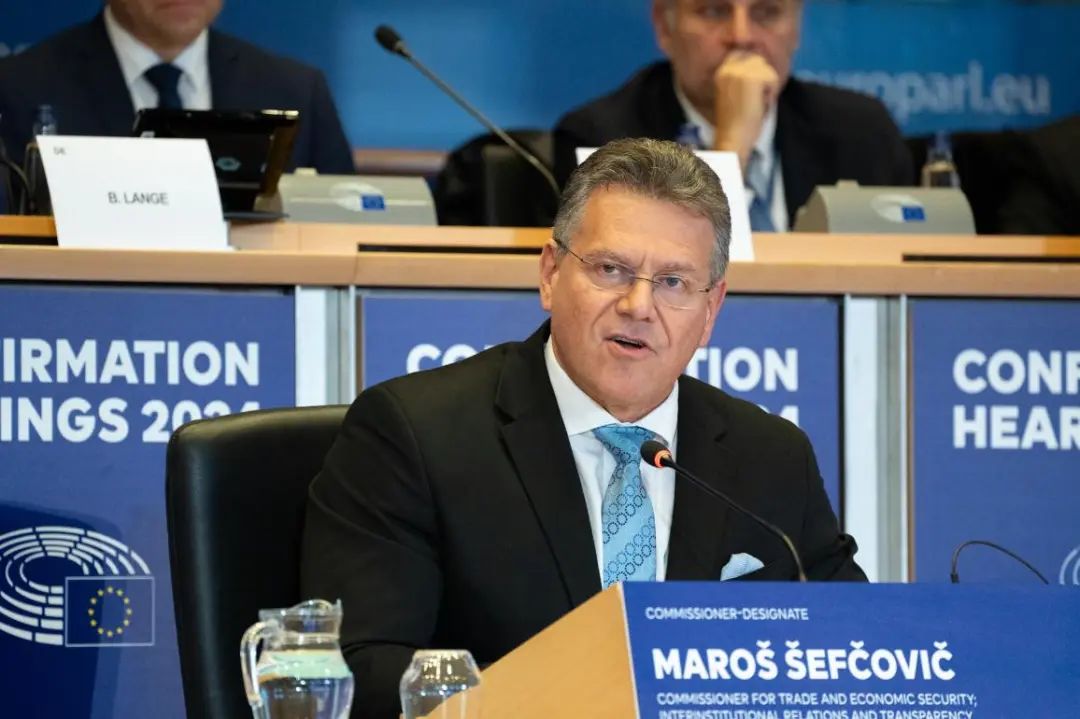
The European Union Will Press China to make a clear commitment to reducing trade imbalances between the two countries and wants to see“Preliminary actions” by early October, European Commissioner for Trade and Economic Security Sergeyevich said recently. He also said that if the dialogue can not be fruitful, the EU will face political pressure to find“Other solutions”. It is the latest in a series of“Ultimatums” that senior EU officials have issued to China, with European media saying“Brussels and Beijing have been on the brink of a trade war”.
On the other hand, while keeping the channels of dialogue open with Europe, China has not responded in kind to the fierce words of the European side, but has constantly urged the European side to properly address each other’s concerns through dialogue and consultation, stressing that China should remain a stable and balanced key trade partnership with the EU, promote balanced and forward-looking trade between the two sides, address each other’s concerns on an equal footing and refrain from making unilateral demands or negotiating conditions, even resorting to the threat of closing the market. It is not that China is afraid of Europe, still less that we are wrong, but that we have the utmost goodwill and patience for china-eu relations. Europe and the U. S. also have huge trade frictions, but how is Europe talking to the U. S. and how is Washington treating Brussels? The Europeans should know.
What is more evident in Brussels’ constant demands for china to“Fix the problem” and set deadlines is its anxiety that it has nowhere to put itself. The first question, however, is whether this anxiety is entirely real? Take, for example, the trade deficit of“About €1bn a day”, often cited by Jean-claude von der Leyen, president of the European Commission. That sounds like a bluff, but it is only a bluff. First, it does not account for the large surplus of the EU’s trade in services with China. Second, many products of EU Enterprises are produced in China and resold to the European market. Although the paper surplus is in China, most of the profits go back to Europe. In addition, the EU’s perception of Chinese goods is skewed. The EU often portrays Chinese goods as“Cheap” from above. But in fact, today’s high-quality Chinese products, excellent prices, has long been the past that“Cheap” concept.
What the EU needs to answer more seriously is why its competitiveness continues to be under pressure. That is the source of Europe’s anxiety. In recent years, the European economy has faced a series of structural problems, such as high energy costs, insufficient investment, slow transformation of innovation, and the fragmentation of the single market. And that’s only part of it. The EU is currently facing a slowdown in economic development, political polarization, social division, as well as with Russia, the United States and other strategic turbulence superimposed comprehensive contradictions. In this case, if you push China to the opposite side, the EU is equivalent to choosing to confront almost all major powers and major economies at a time of internal conflicts. This is also a rare situation in the history of the EU.
There has been much talk in the European media recently of a“Trade war with China”, but is the EU really prepared to wage such a war? China doesn’t want a trade war, because there are no winners, but it has never been afraid of a trade war, and will not accept the threat of a trade war as a means of negotiation. There is no way that the EU wants to“Top up” its positions by forging some kind of unequal trade deal that allows china to“Cut the meat” unconditionally. China will not yield to any external coercion, as history has shown time and again. In fact, the EU does not have the capacity to wage a trade war with China. If it is determined to do so, try it.
China is supposed to be a strategic partner in helping the EU solve its problems, but is mistaken for the problem itself. This is a huge and regrettable strategic miscalculation by the EU. The fundamental reason is that the EU as a whole lacks a systematic, comprehensive and realistic knowledge system and cognitive ability on China, and there are not many influential scholars and policy makers who can really study China in depth. In fact, there are many successful cases of cooperation between China and the EU. Take Germany, for example, which currently advocates a tough stance on China. The establishment of a price negotiation mechanism in Volkswagen Anhui is a positive case in point. However, the European media and policy circles are only willing to shout“Deficit resolution” and set up their own“Politically correct high-pressure”, and dare not mention these constructive cooperation experiences. This is precisely the result of the highly emotional, one-sided and negative EU policy towards China.
China-eu economic and trade cooperation is large in scale and covers a wide range of areas. The two sides can complement each other’s advantages and achieve dynamic balance in the process of development. Moreover, the pie of china-eu cooperation can be even bigger. For example, in new areas such as artificial intelligence and climate governance, there is much room for technological development and economic cooperation between China and the EU. The two sides can find new areas of convergence in climate, carbon emissions and global governance. In addition, China and the EU can continue to jointly explore ways to advance cooperation within multilateral frameworks such as the WTO. If the EU sticks to its guns, not only will its“Competitiveness” problems not be solved, but these new opportunities for co-operation will be lost. The EU needs to think again.