On Tuesday (September 8), local time, the United States Secretary of the Treasury, Joe Bassent, challenged the yen’s short sellers, showing that he was pushing the yen to rise, and stated bluntly that with his current status, his market judgment essentially held an “insider advantage”.
“Whenever someone says, ‘Oh, the Secretary of the Treasury is taking a risk’—well, that’s exactly the situation I’ve been dreaming of, and I have the advantage of information asymmetry,” Bessent said at an event at Southern Methodist University in Texas on Tuesday.
Bessent said, “I am now the dealer, so when we intervene in the yen, I have quite a deep understanding of what the Japanese, the Bank of Japan, and the Japanese policymakers will do.”
“If you want to bet with me, you can come right up,” Bessent said rather boldly.
In reviewing his experience of market intervention, Bessent mentioned the joint purchase of the yen by the United States and Japan on July 31st.
This was also the first joint intervention between the two countries in 15 years, aimed at supporting the heavily hit yen. For the United States, the yen‘s devaluation weakened the trade advantage brought by Trump‘s signature tariff policy, and the resulting Japanese bond selling wave could also affect U.S. bond yields – this was also the key reason for the United States‘ rare joint intervention this time.
It is known that the U.S. Treasury sold the euro in the U.S. reserves during the joint operation at the time and used the proceeds to buy yen.
Bessent said at the time that the yen was “seriously undervalued,” too volatile, and unfavorable to the market‘s health. He was also once photographed by the media writing a “to-do item” in his notebook: buy yen worth $5 billion to $10 billion.
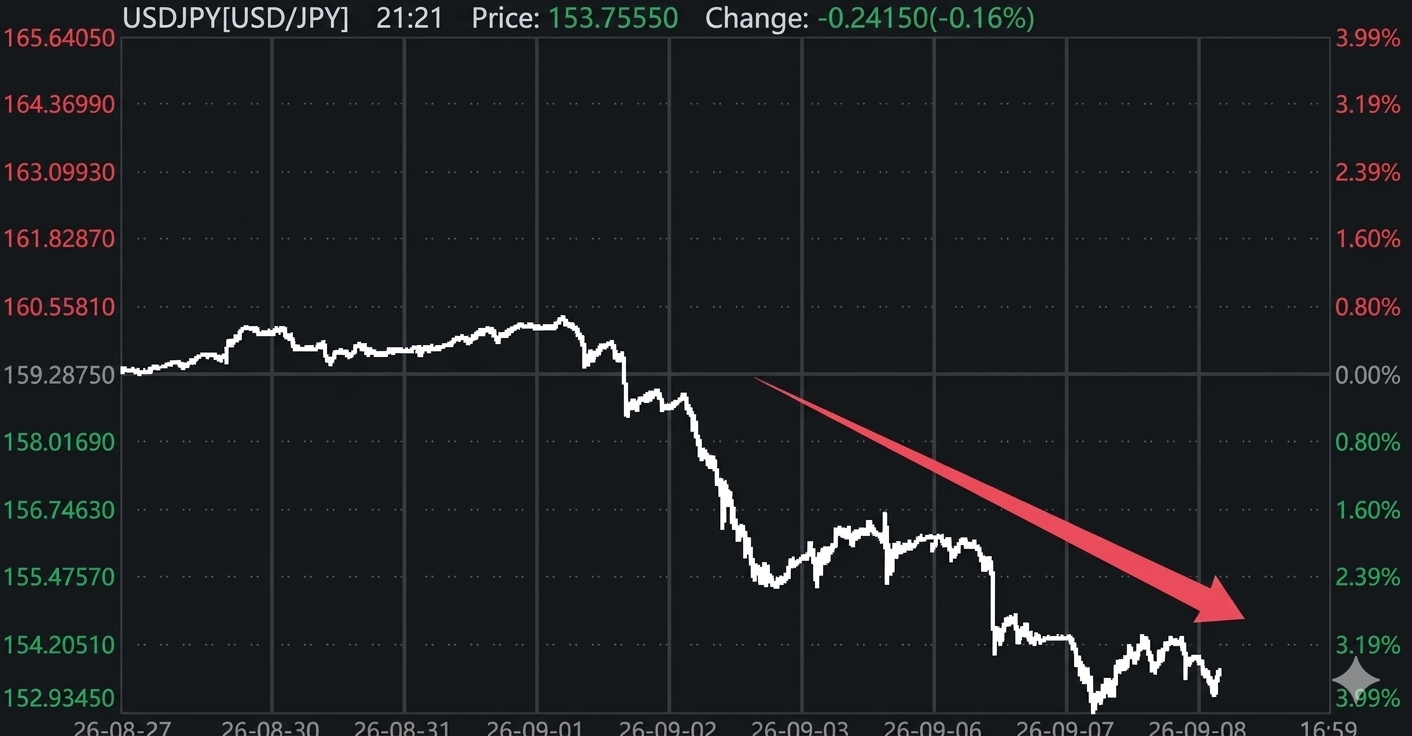
Although the yen gradually narrowed in appreciation in the few trading days following the intervention, in part because traders pointed out that the U.S. Treasury‘s firepower in buying foreign exchange was limited, recently the dollar against the yen once again became large, making Besant once again appear “confident.” Market data showed that the dollar against the yen had reached a low of 152.87 on Tuesday, the lowest point since February 18.
During his career, as a “Soros disciple,” Besant was obviously extremely familiar with the foreign exchange market.
Bessent joined Soros Fund Management in 1991. He was one of the backers behind the firm‘s bets on the pound’s collapse after discovering that the British real estate market was clearly weak. That world-famous “Sniper on the Pound” battle made Soros famous, earning $1 billion in one go and being hailed in the industry as “the man who defeated the Bank of England”—a battle in which Bessent was clearly “not without merit.”
From 2011 to 2015, Bessent served as the chief investment officer of Soros Funds and for a time oversaw the company‘s specific businesses. In 2013, he was once again praised for successfully betting on a weak yen. Bessent left in 2015 and founded the hedge fund Key Square. The name Key Square derives from the “key grid” in chess, and the fund has focused for the past decade on macro investing, that is, using economic and geopolitical information to predict macro market trends.